
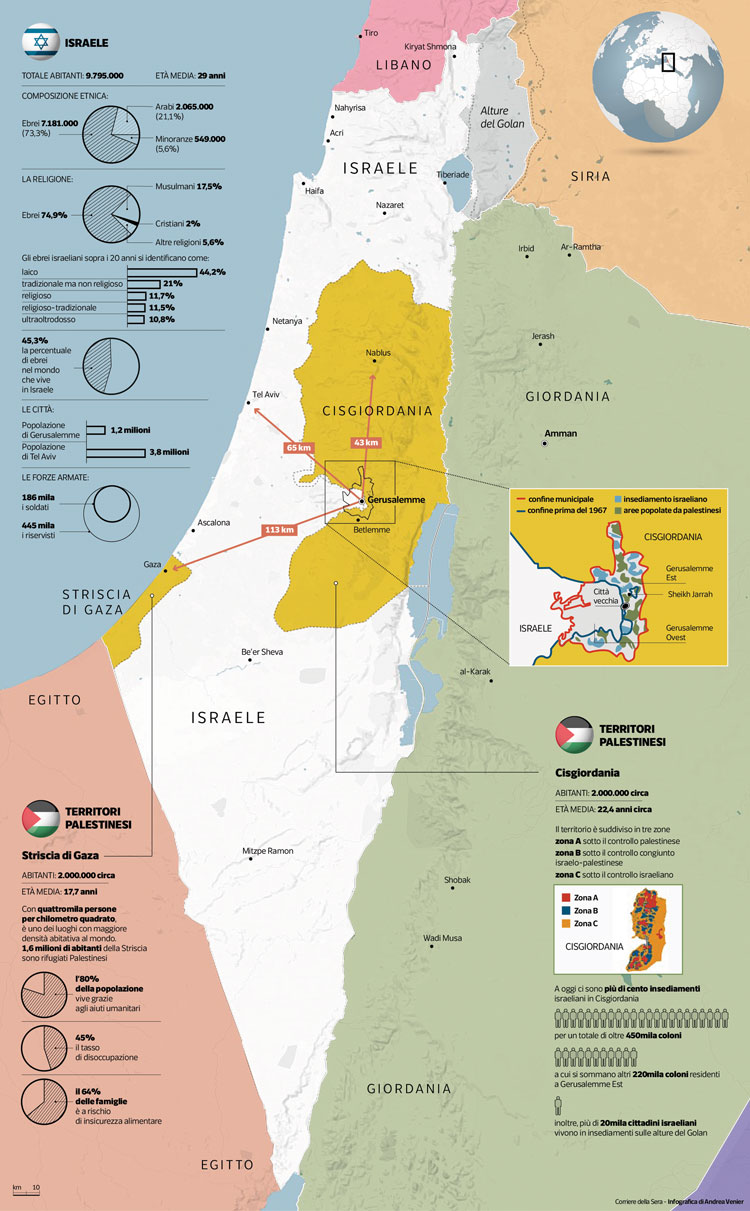
The attack by Hamas on Saturday, October 7, 2023 brought back to our attention the “Palestinian question” which recent events (the Covid epidemic and the war in Ukraine, among others) had pushed into the background. *
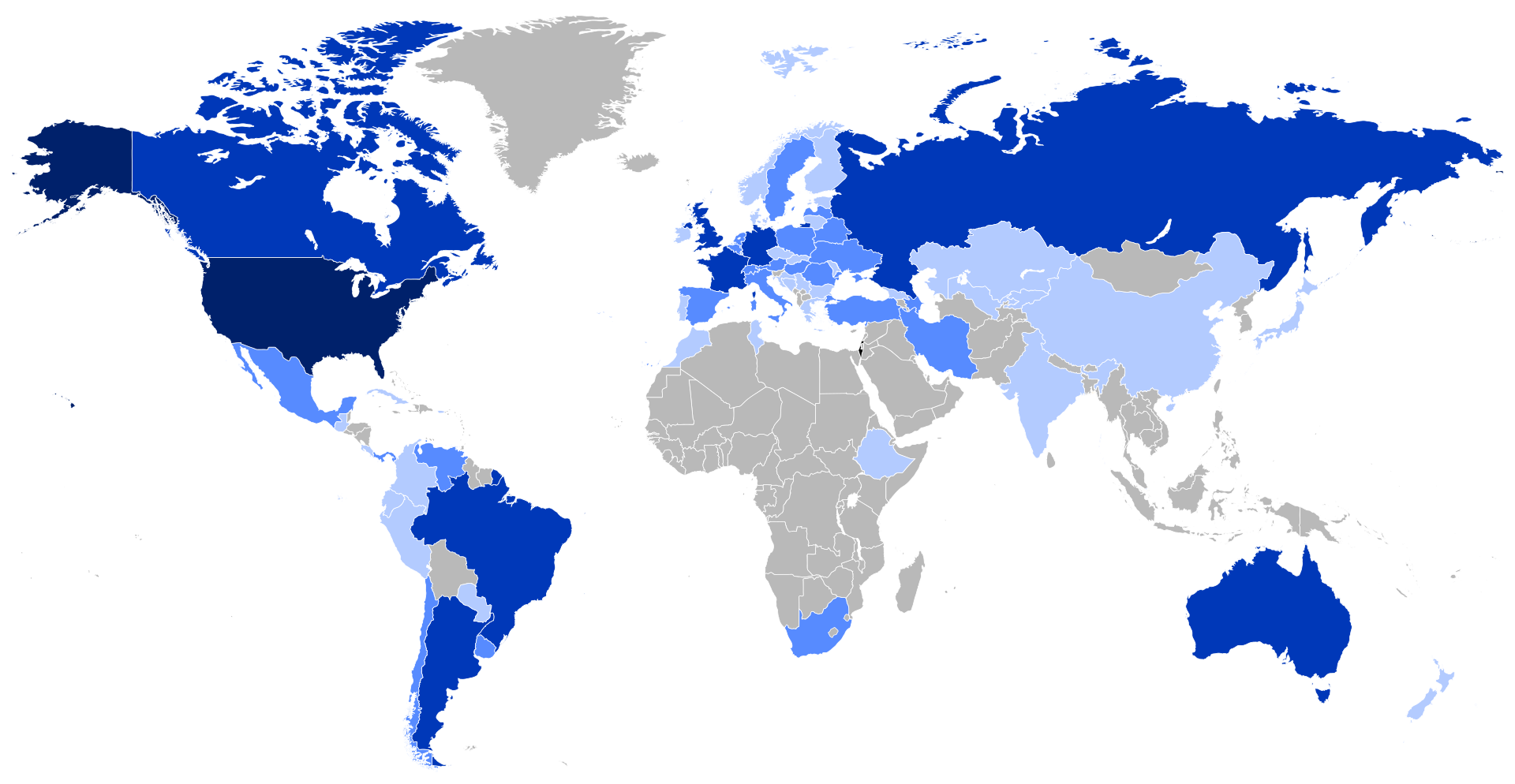
According to a UN resolution, there should be two independent states in Palestine: the Arab state and the state of Israel, but unfortunately this is not the case. Both Israelis and Palestinians consider themselves the only ones entitled to live in those territories, which are mostly desert and infertile. The situation is worsened by the cultural and religious differences that make any form of mediation and compromise difficult. Finally, there is the issue of international alliances that have loaded the conflict with meanings far beyond the simple possession of the territories. Indeed, the United States and many Western countries side with the Israelis, while Iran, Qatar, Egypt, and many Arab countries side with the Palestinians.
In light of all this, it is legitimate to ask the following questions:
- Which of the two contenders is right?
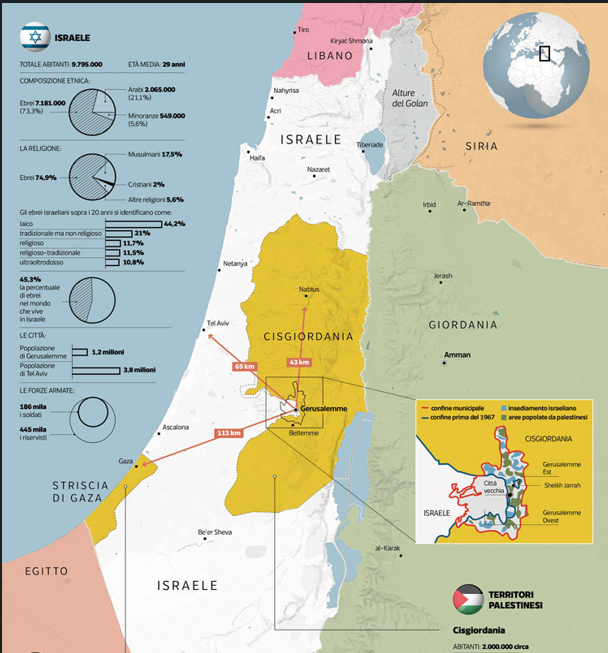
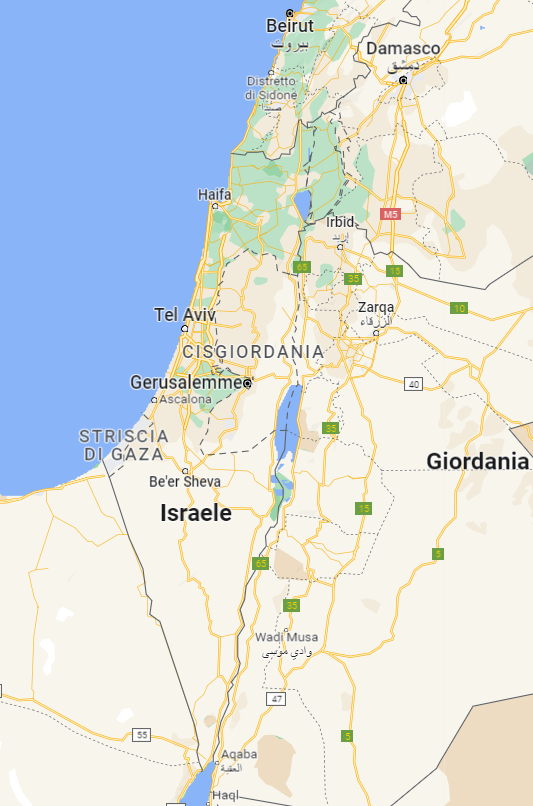
- Who can rightfully claim ownership of the territories between the Mediterranean Sea, the Jordan River, the Dead Sea, Egypt, the Golan Heights, and Lebanon?
- Who is the attacked and who is the aggressor?
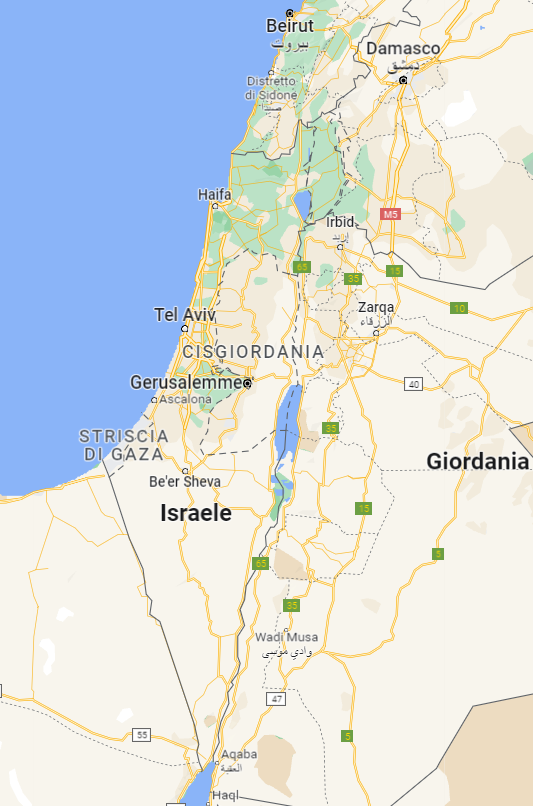
I do not believe one can express an opinion without knowing the history of that geographical area.
Below is a simple sequence of events and historical data summarizing the main historical facts.
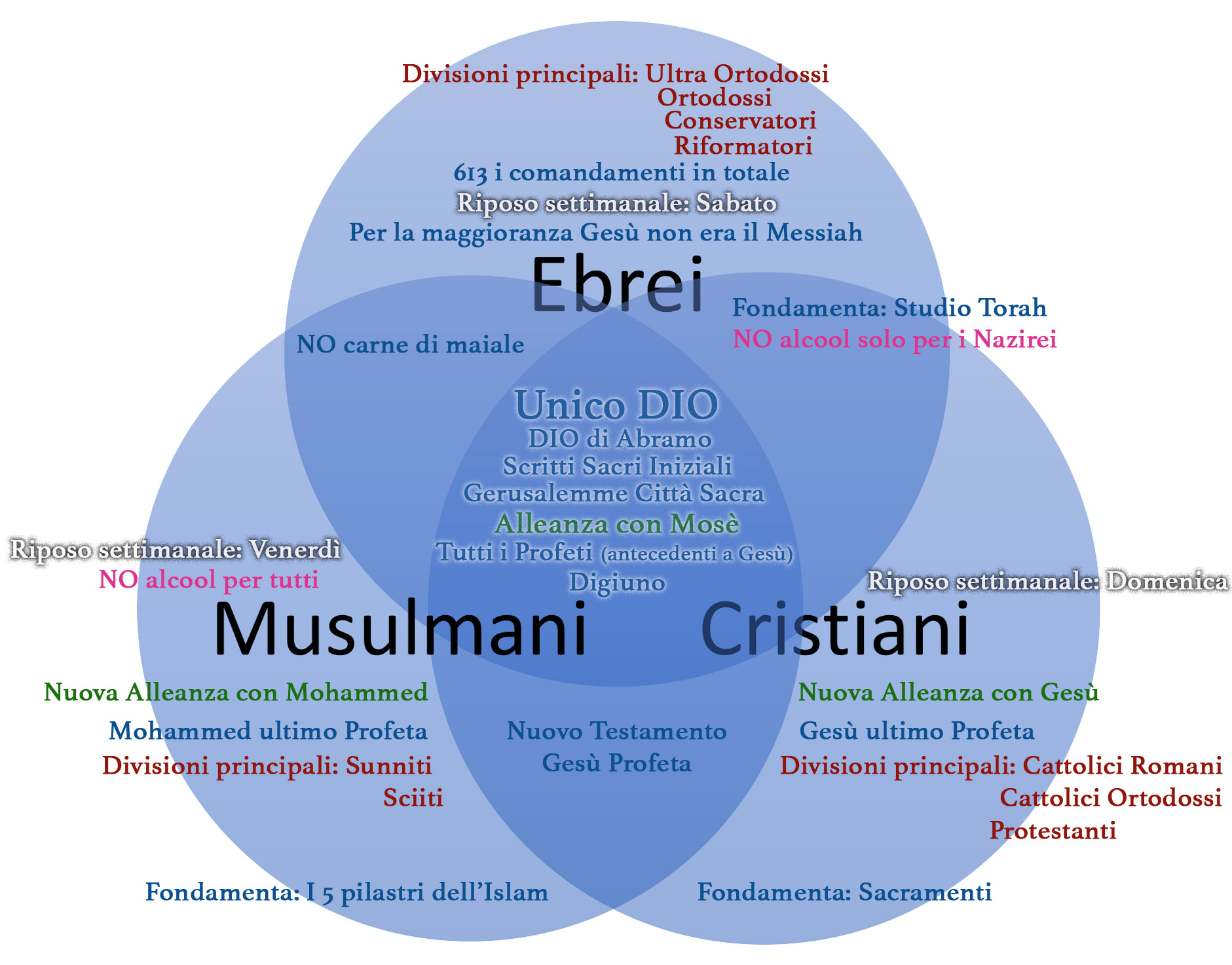
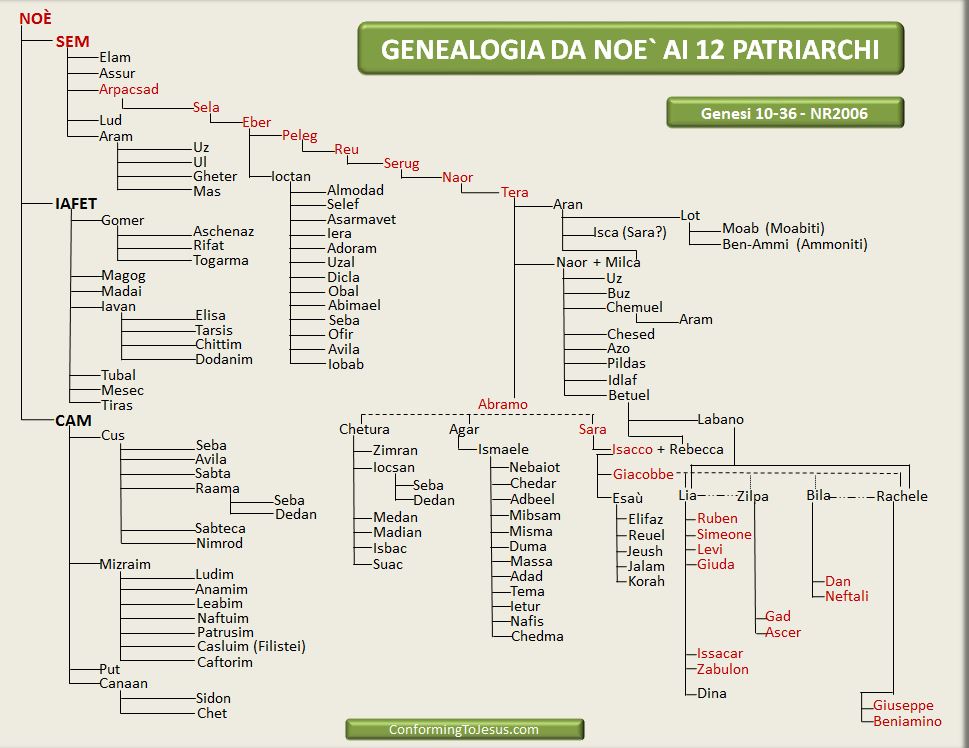
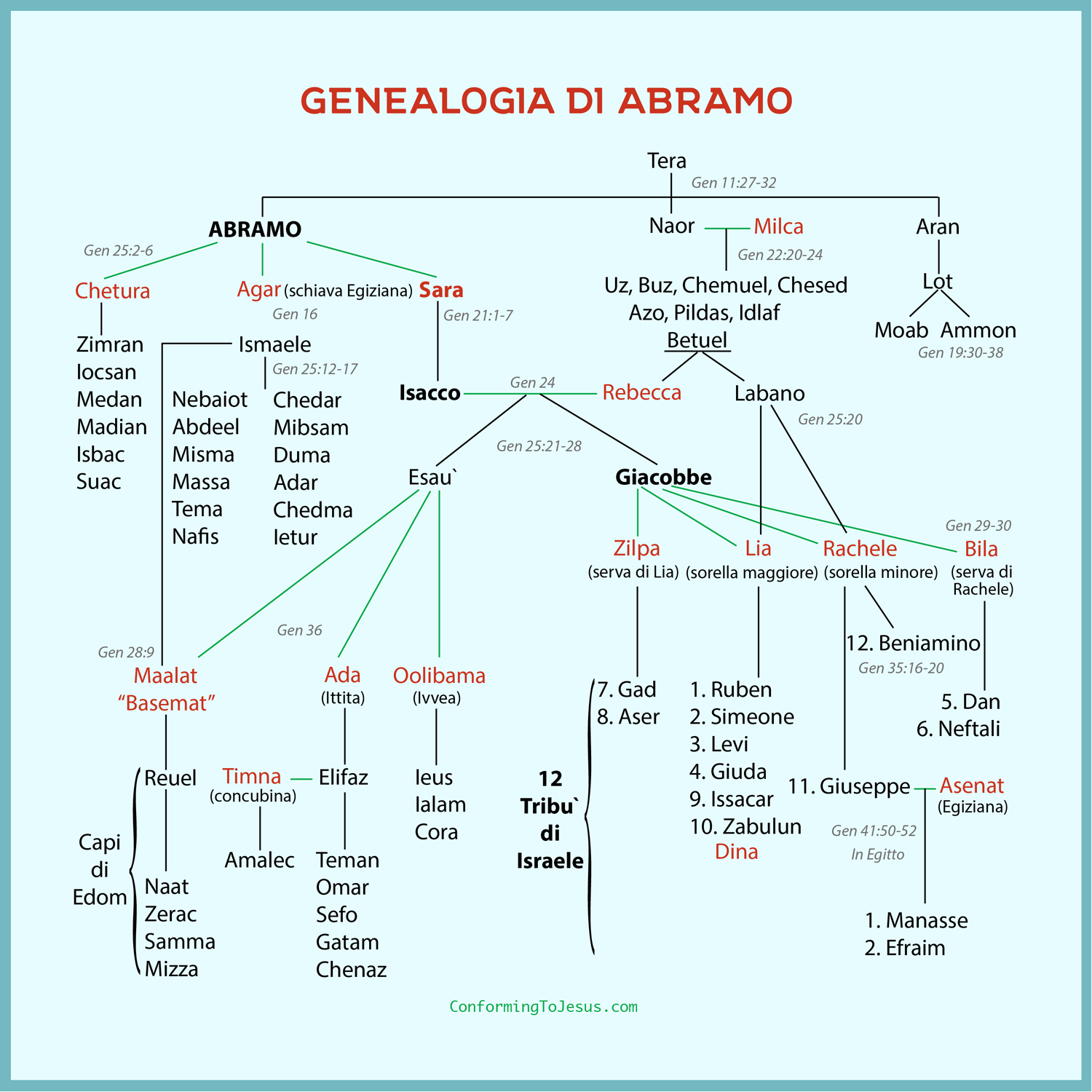
It should be noted that often when discussing the history of the Jews, historical facts based on credible sources are mixed with facts extracted from sacred texts (primarily the Bible). The latter, being religious books and not historical, are not 100% reliable and their accounts are often not supported by archaeological evidence or other historical sources.
The History of Palestine
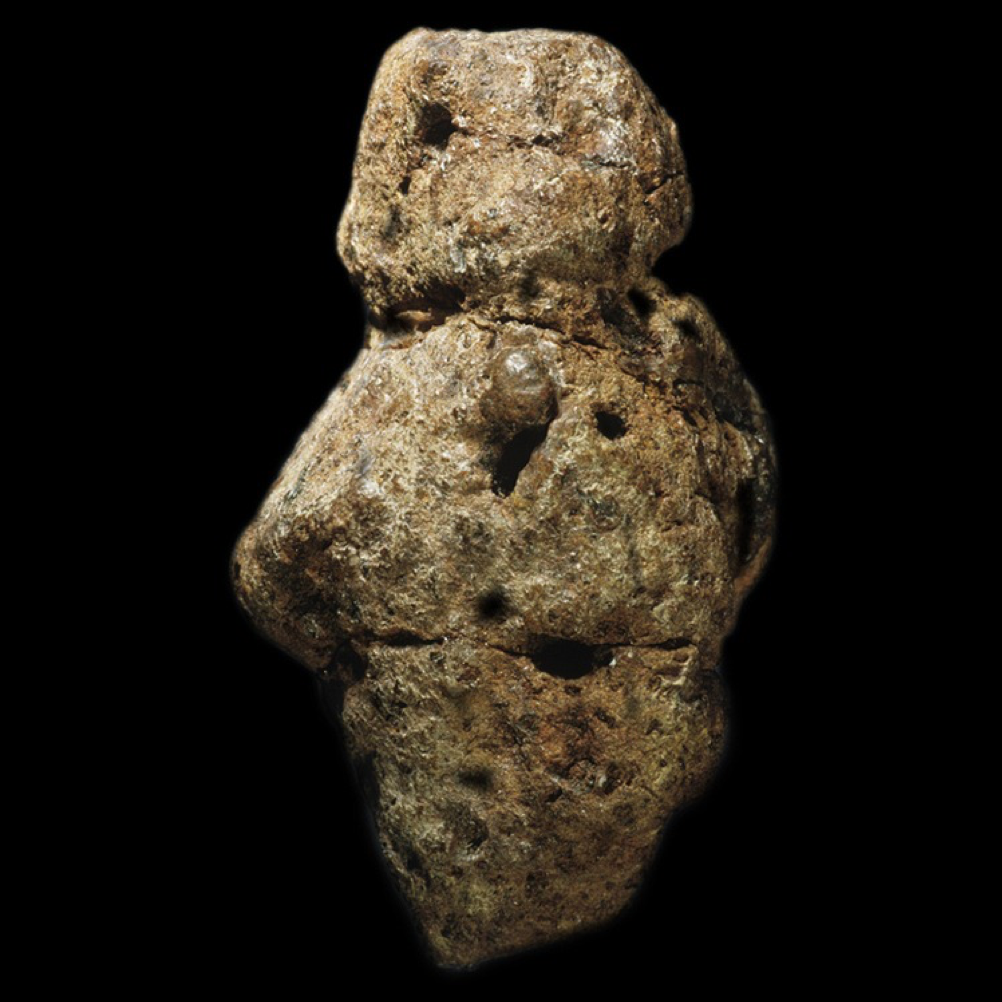
- 230,000 kya: Venus of Berekhat Ram. In 1981, on the Golan Heights in northern Palestine, a statuette was found that could have been made by a Homo erectus.
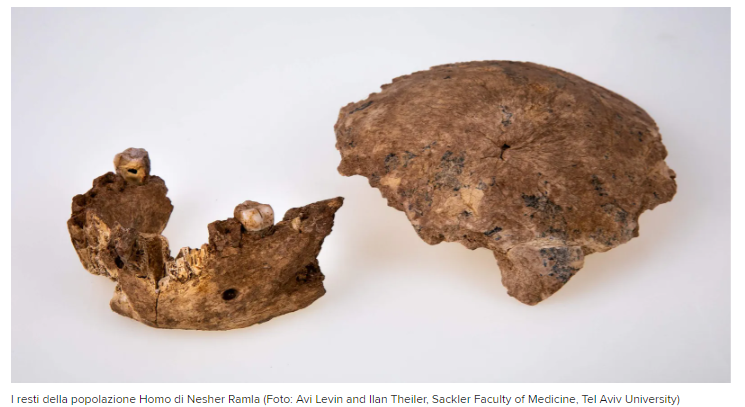
- 140,000 – 120,000 kya: At the Nesher Ramla site, between Tel Aviv and Jerusalem, fossils were uncovered in 2010 that testify to the presence of Homo neanderthalensis.
- 19,000 BC – 12,000 BC: Kebarian Culture. In the Kebara cave north of Caesarea, archaeologists found remains of a culture called Kebarian. They were nomads, living in groups of up to 40-50 people, following the prey. In winter, they settled in caves and in summer in temporary shelters. They began to hunt responsibly to avoid depleting the herd and to select the grasses and legumes they ate, acquiring knowledge useful for future livestock and agriculture.
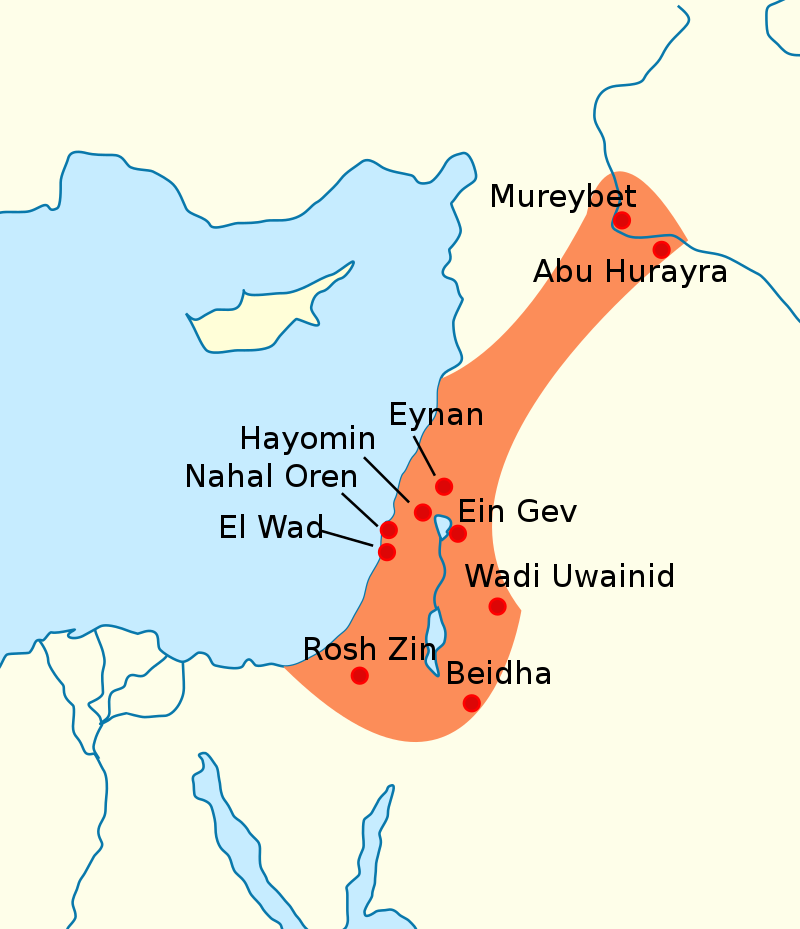
- 12,500 BC – 10,200 BC: Natufians. Over the years, artifacts have been found throughout Palestine that testify to the existence of the Natufian culture. These people lived in stable settlements of about a hundred people, choosing to stay there because the territory was rich in resources and had a favorable climate. They were engaged in hunting, fishing, and gathering wild cereals. They may have been among the first to cultivate cereals or at least to experiment with it.
- ~9000 BC: Archaeological excavations date the first stable settlements to this period in the city of Jericho (current West Bank). This dating would make it one of the first, if not the first permanently inhabited site on Earth. Before then, humans, whom we now call hunter-gatherers, were essentially nomadic and did not live in cities or nations. This means that this geographical area has always been inhabited, even before any form of culture or religion arose.
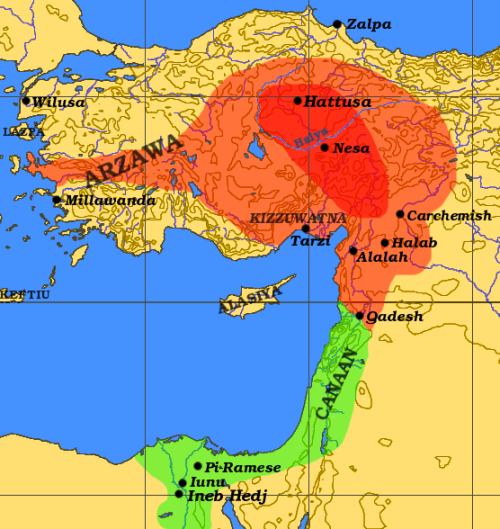
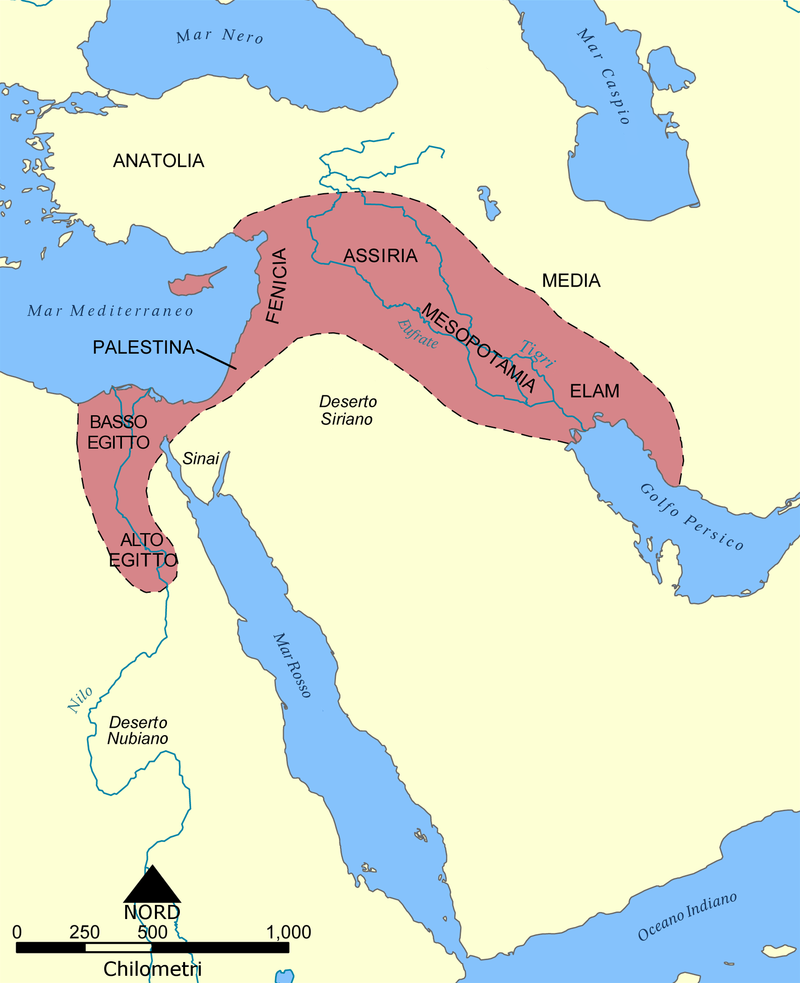
- Land of Canaan: The Canaanites were a Semitic population that, before the arrival of the Jewish tribes, inhabited Lebanon, Palestine, and parts of Syria and Jordan. They were populations engaged in fishing, pastoralism, and agriculture. Some tribes were nomadic while others were settled. These populations never achieved political unity or independence.
- ~1200 BC: The Philistines, a people likely from Crete (some identify them with the Peleset), migrated to the historical region of Palestine (Philistia). It is now established that their ethnic origin was different from that of the Jews.
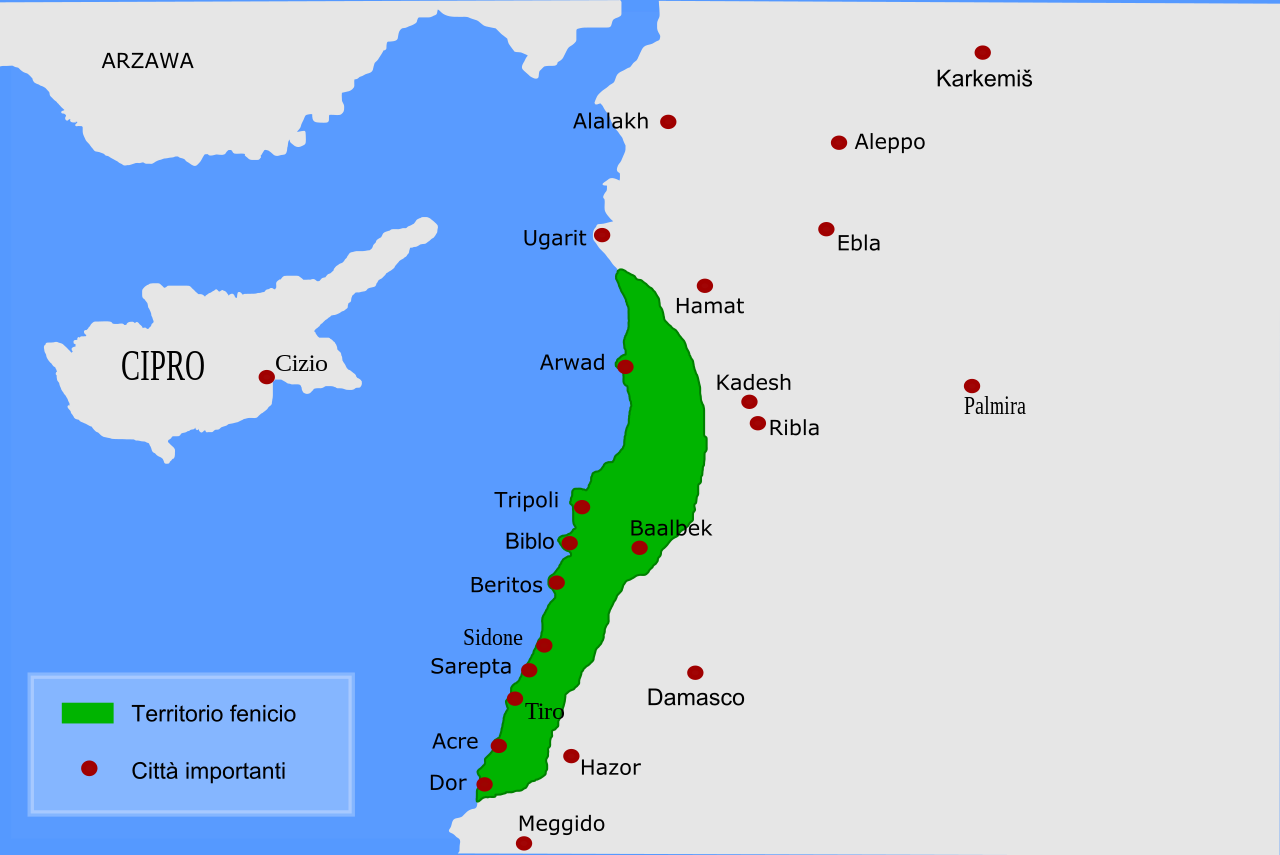
- ~1200 BC – 333 BC: This is the period of maximum expansion of the city-states of the Phoenicians, distributed in the territories of present-day Lebanon, southern Syria, and northern Israel. Some cities like Tyre and Byblos are attested as early as the 3rd millennium BC. This population is thought to have originated from the Persian Gulf.
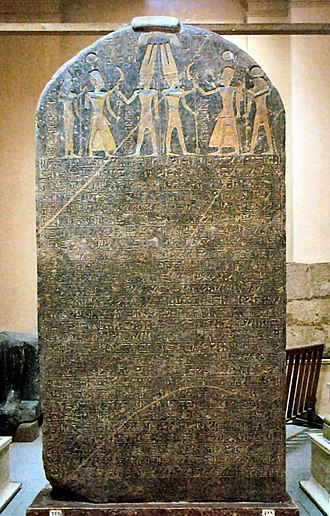
- ~1200 BC – 1000 BC: There is evidence (e.g., Merneptah Stele [11]) of a group of semi-nomadic tribes in Palestine sharing language, traditions, and monotheistic religion [10]. This people likely came from Mesopotamia and can be considered the first Jewish people.
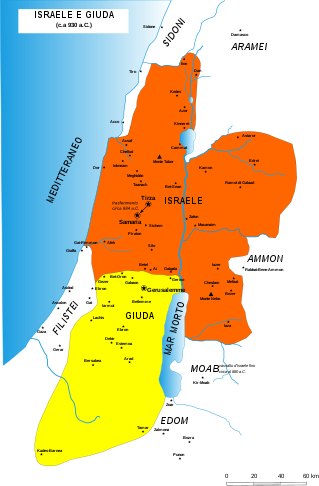
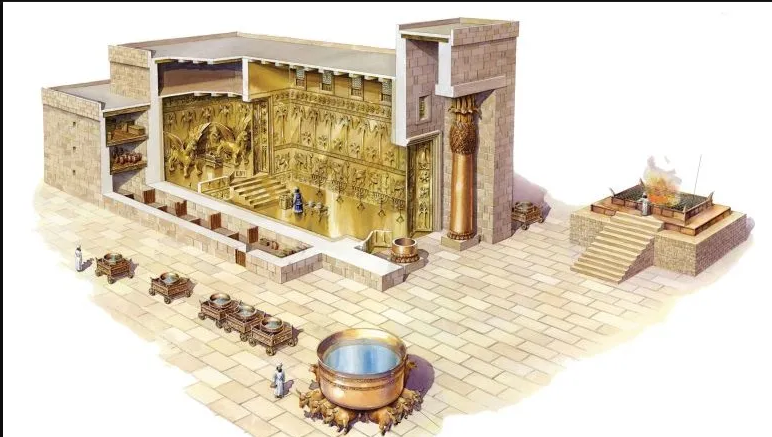
- ~1030 BC: It is probable that the Jewish tribes united into a single kingdom called the United Kingdom of Israel. According to biblical tradition, the first three kings were: Saul, David, and Solomon. The existence of this kingdom is not confirmed by certain sources [7].
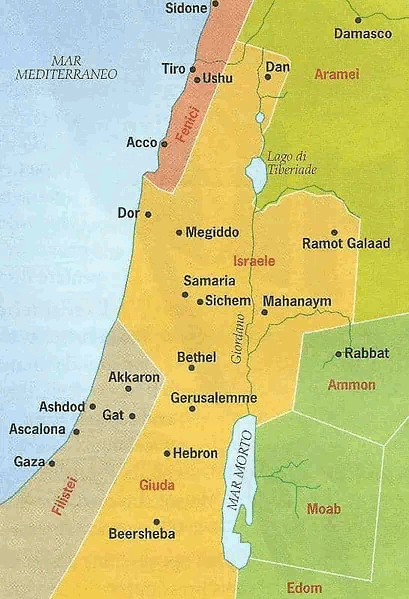
- ~933 BC: Upon the death of King Solomon, the United Kingdom of Israel was divided into two kingdoms: the Kingdom of Israel, with capital Samaria in the north, and the Kingdom of Judah, with capital Jerusalem in the south. This information is confirmed by Assyrian inscriptions (the Assyrian empire lasted from 911 to 609 BC) [10].
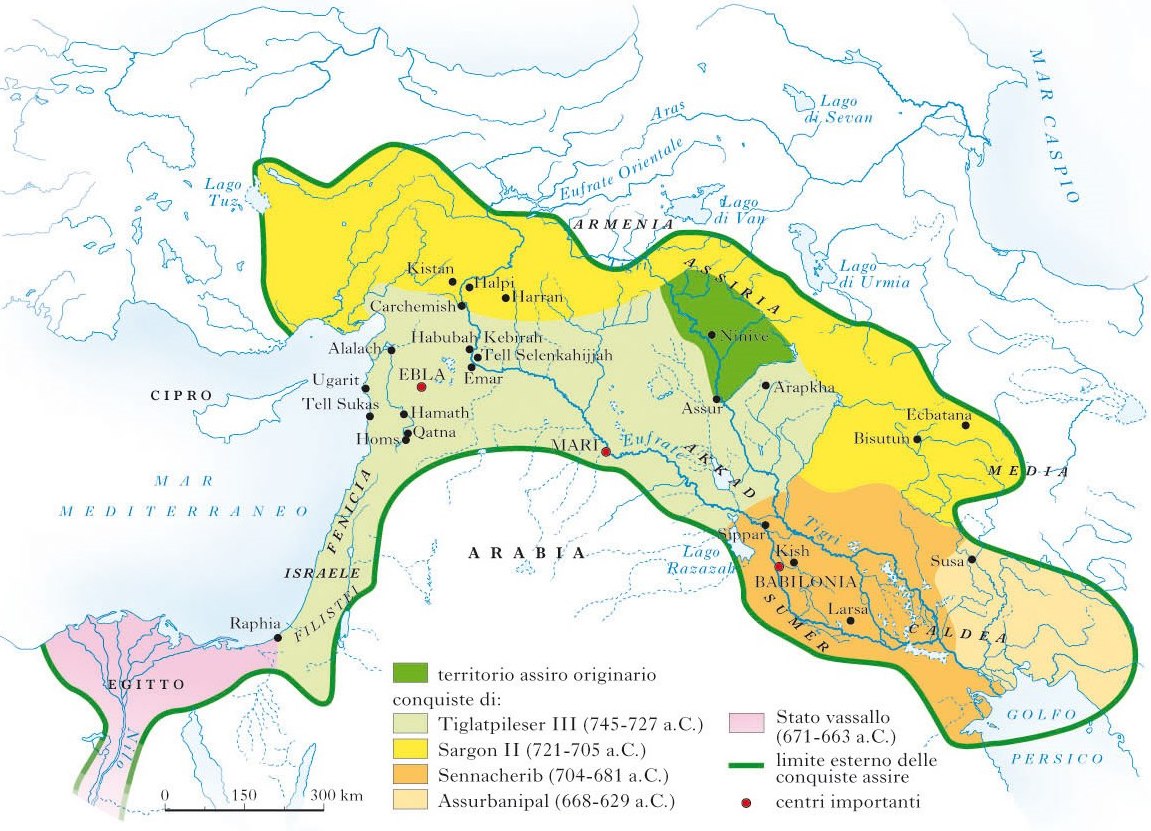
- 722 BC: The Assyrians conquered the Kingdom of Israel and deported the population to Mesopotamia. The Kingdom of Judah, allied with the Assyrians, was spared from the bloody conquest.
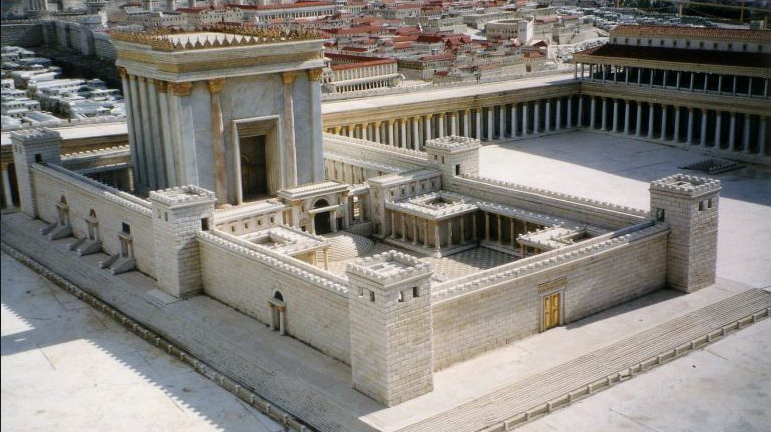
- 587 BC: The Babylonians rebelled against the Assyrians, defeated them, conquered their territories, and under the reign of Nebuchadnezzar II, destroyed Jerusalem after years of siege (Kingdom of Judah, allied with the Assyrians) and razed the Temple (“First Temple“). The Jews were deported to Babylon as slaves. This began the period of the “Babylonian captivity” of the Jews.
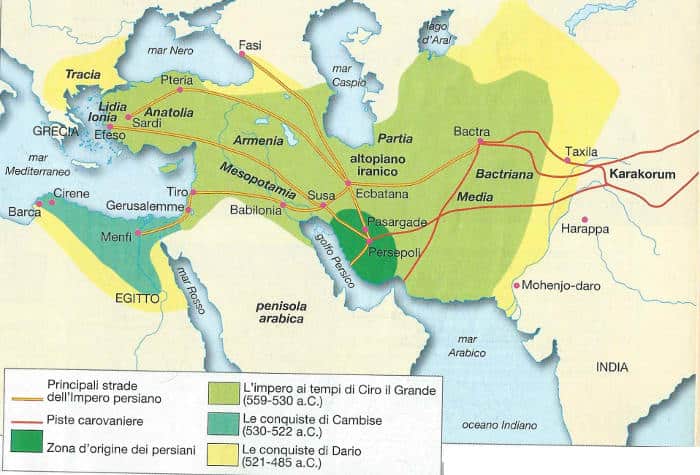
- 538 BC: The Persians defeated the Babylonians, King Cyrus conquered Babylon and allowed the Jews to return to their homeland and rebuild their Temple (“Second Temple“, 515 BC). Not all Jews returned to Palestine; many remained in Babylon, giving rise to the “Jewish diaspora“, i.e., their dispersion worldwide.
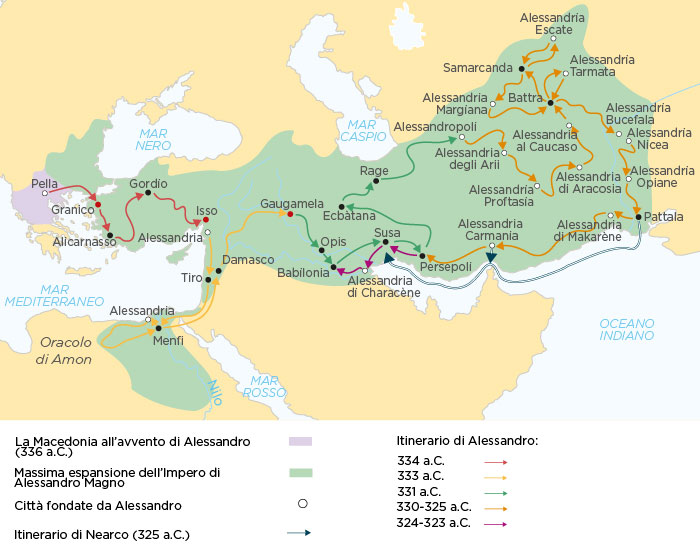
- 332 BC: Alexander the Great defeated the Persians at the Battle of Issus in 333 BC and in 332 besieged and conquered the city of Tyre in present-day Lebanon. The entire region became part of the Macedonian empire.
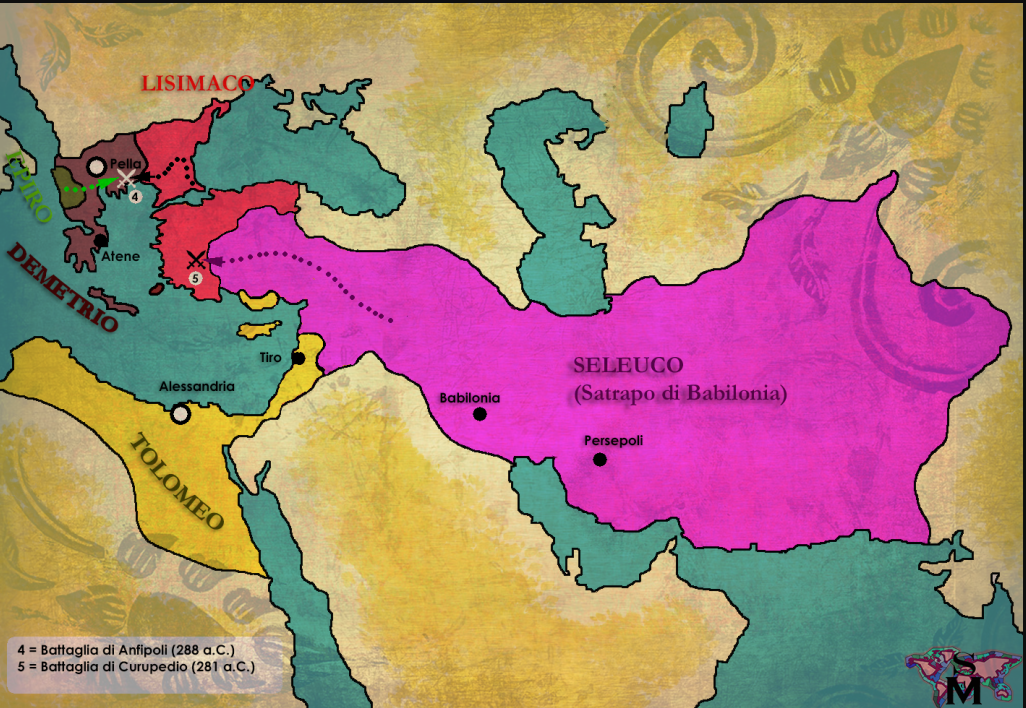
- 323 BC – 167 BC: After Alexander the Great’s death, his kingdom was divided into 4 parts (Wars of the Diadochi) and Palestine became a contested territory between the Ptolemaic Kingdom of Egypt, initially assigned to it, and the Seleucid Kingdom, which conquered it later.
- 167 BC: During their rule, the Seleucids carried out a campaign of religious persecution against the Jews, who eventually rebelled led by Judas Maccabeus (member of the aristocratic Hasmonean family). He gave his name to the entire revolt movement: the Maccabees. The Seleucids were gradually pushed out, and Israel achieved some political autonomy only in 140 BC.
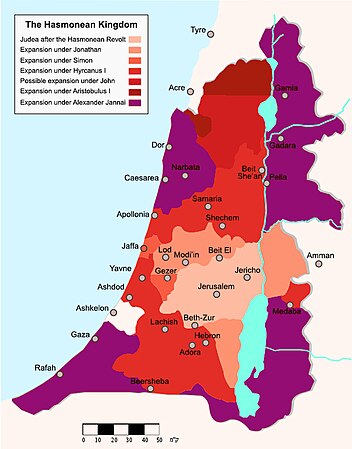
- 140-63 BC: The independence of the Kingdom of Judea or Hasmonean Kingdom lasted about 80 years, marked by fierce internal power struggles that led to the emergence of religious factions mentioned in the Gospels: Pharisees, Sadducees, and Essenes.
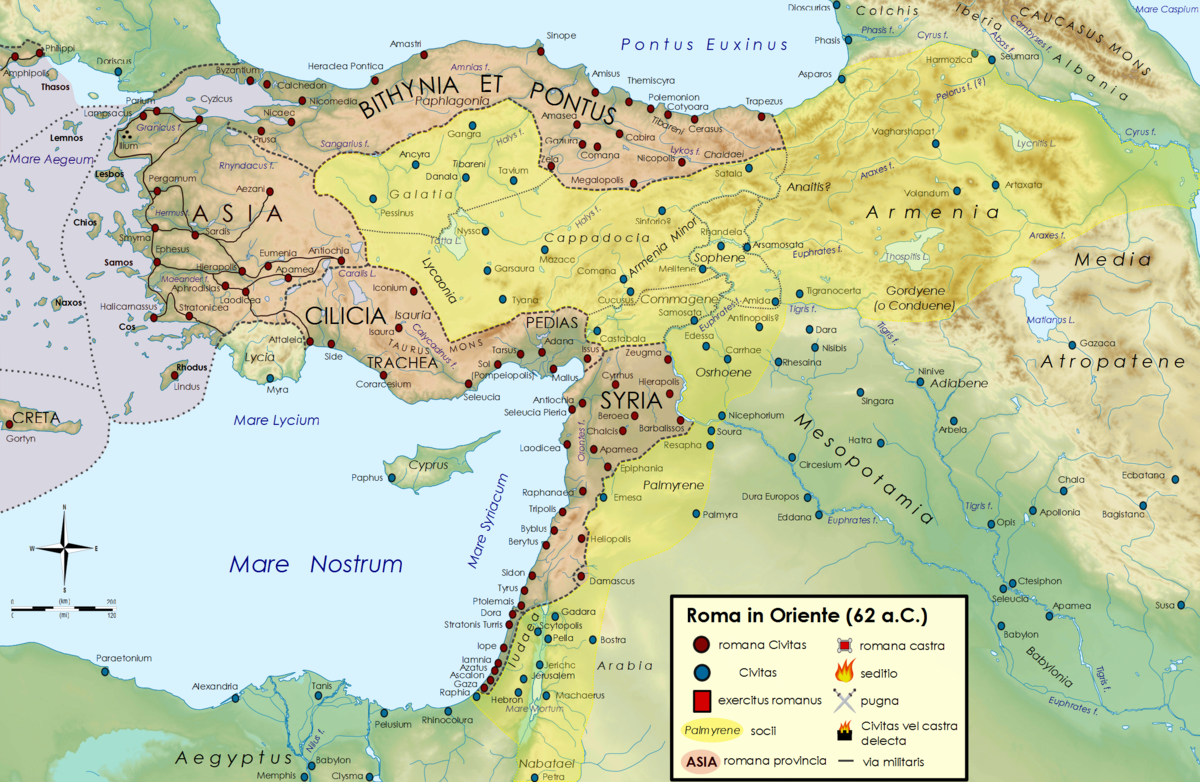
- 63 BC: The Romans, led by consul Gnaeus Pompeius Magnus, during the Third Mithridatic War, conquered Jerusalem. Palestine became a Roman imperial province. The Romans, as usual, allowed one or more local kings to administer the region as long as they paid taxes to Rome.
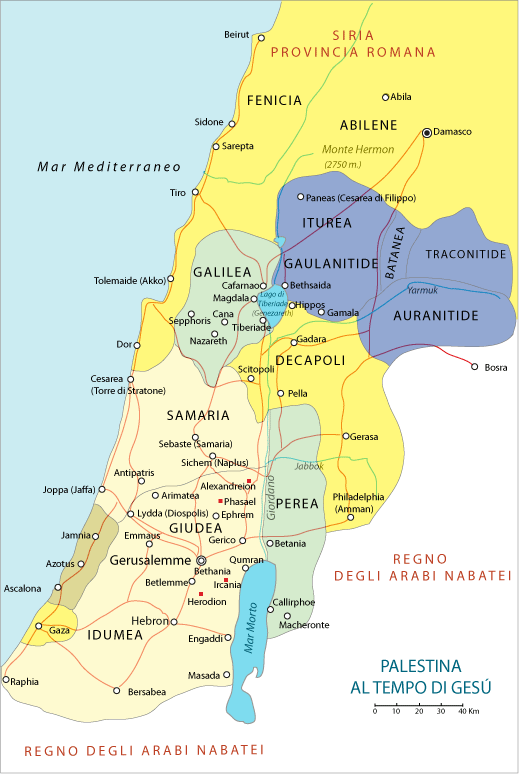
- 37 BC – 4 BC: Reign of Herod the Great (also called Herod the Bloody), formally independent but effectively under Roman influence. Herod, though not Jewish, initiated the renovation and expansion of the Jerusalem temple (the “Second Temple” completed in 64 AD). During this period, violent opposition groups to the regime emerged, including the Zealots and Sicarii.
- 4 BC – 395 AD: After Herod’s death, his kingdom was divided into parts, some governed by his sons, others under direct Roman rule. Opposition to Roman rule was continuous and violent, with many revolts, the most important being the three Jewish Wars: the first between 66 and 70 AD, the second between 115 and 117 AD, and the third between 132 and 135 AD. After the revolts of 70 and 135 AD, Jews were expelled from the Kingdom of Judea or sold as slaves (the “Great Diaspora“).
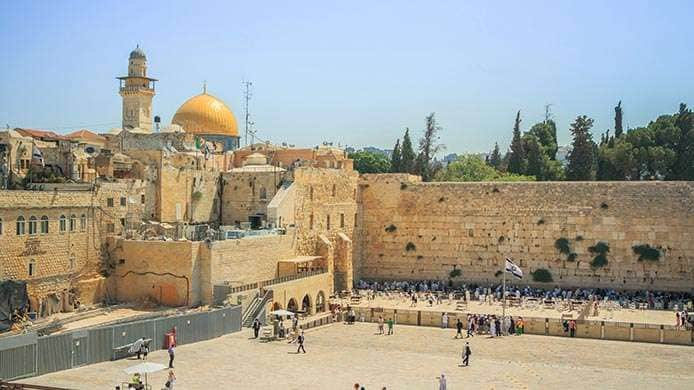
- 70 AD: General Titus, son of Emperor Vespasian, reconquered Jerusalem and destroyed the Temple (“Second Temple“). Since then, the Temple has never been rebuilt; only ruins and the so-called Western Wall remain.
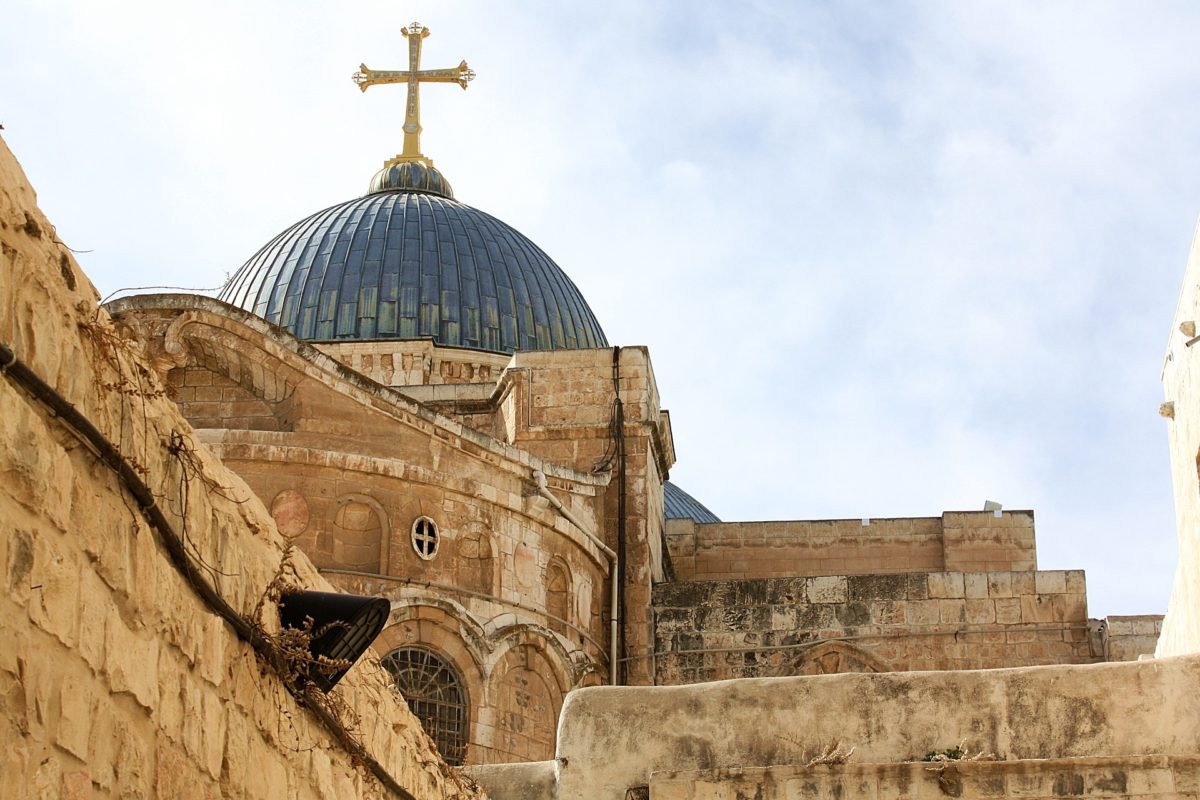
- 325 AD: Emperor Constantine ordered the construction of the Basilica of the Holy Sepulchre on the site believed to be Jesus’ tomb. Construction was completed in 335.
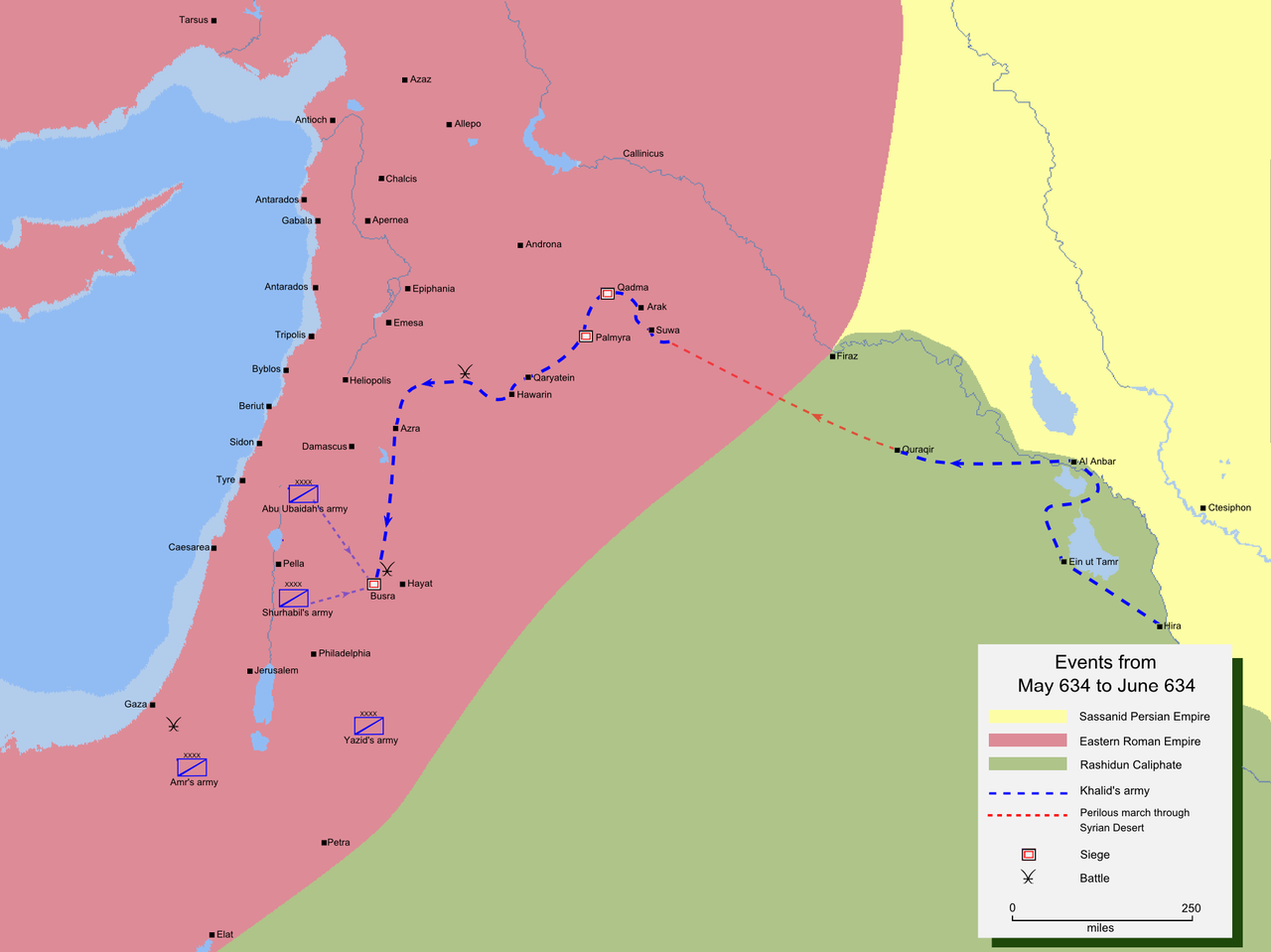
- 395 – 634: In 395, Emperor Theodosius died, having divided the empire between his sons Arcadius (East) and Honorius (West). Palestine thus became part of the Eastern Roman Empire (Byzantine Empire) until the Arab caliphates’ conquest.
- ~610: Muhammad (570-632) began his preaching.
- 622: Hijra of Muhammad to Mecca.
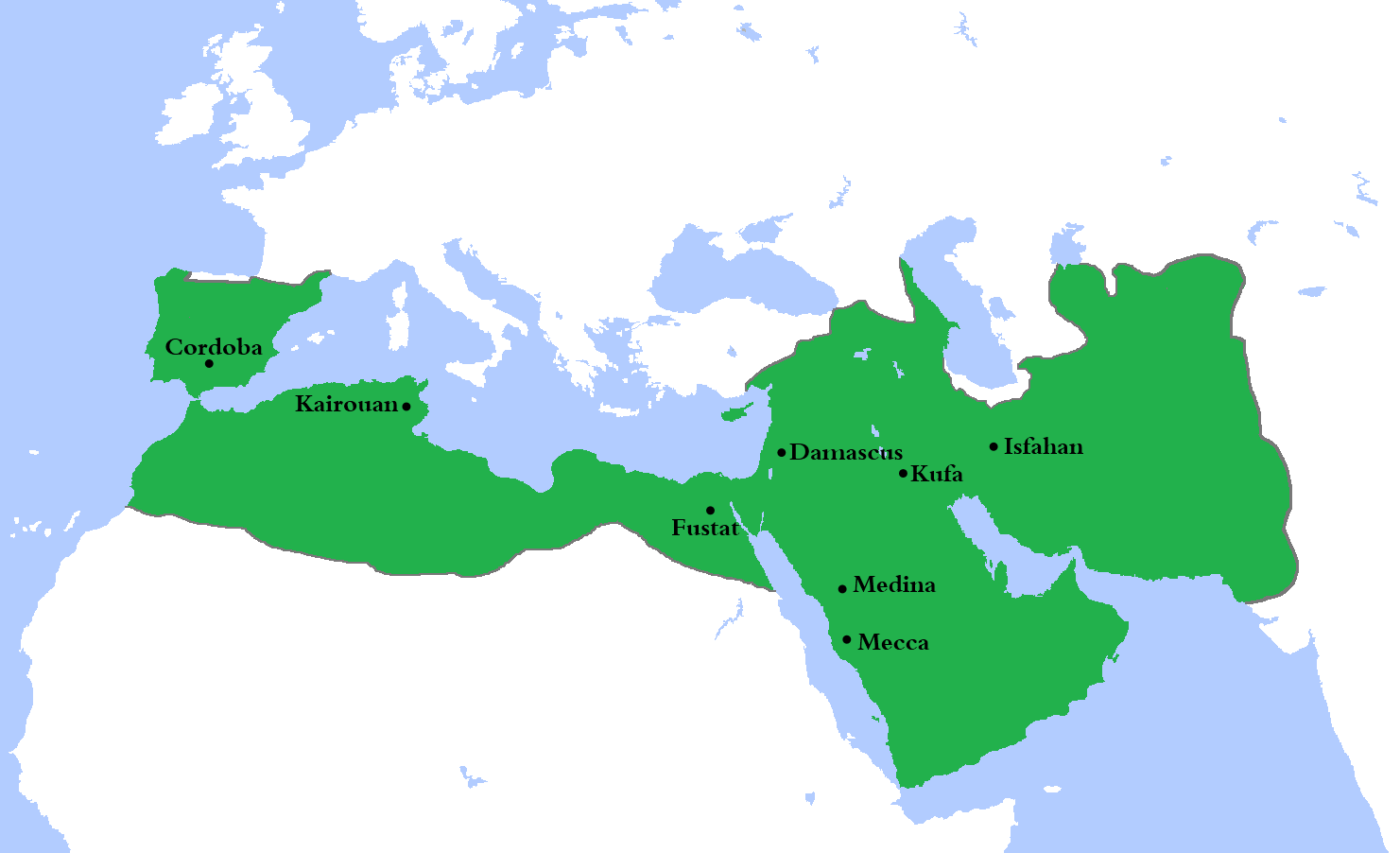
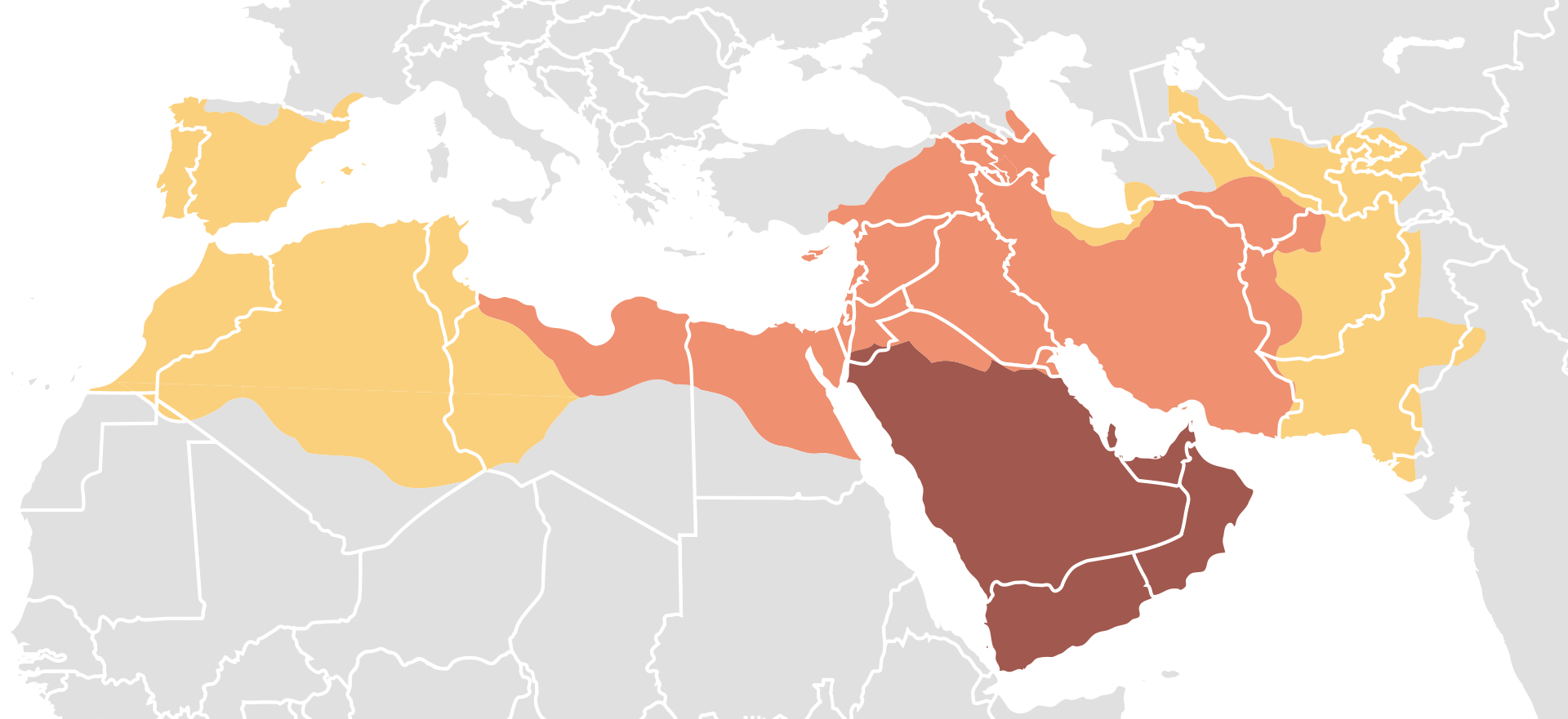
- 634 – 1299: Palestine was conquered by the Arab Caliph Omar ibn al-Khattab. The successive caliphates were: Umayyad Caliphate, Abbasid Caliphate, and Mamluk Sultanate.
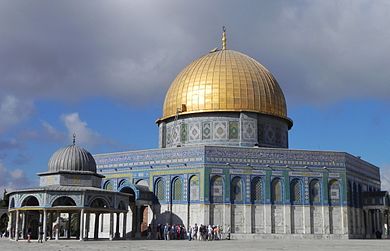
- 687 – 691: Construction of the Dome of the Rock Mosque on the Temple Mount or Haram al-Sharif.
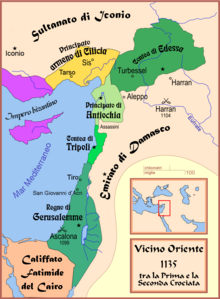
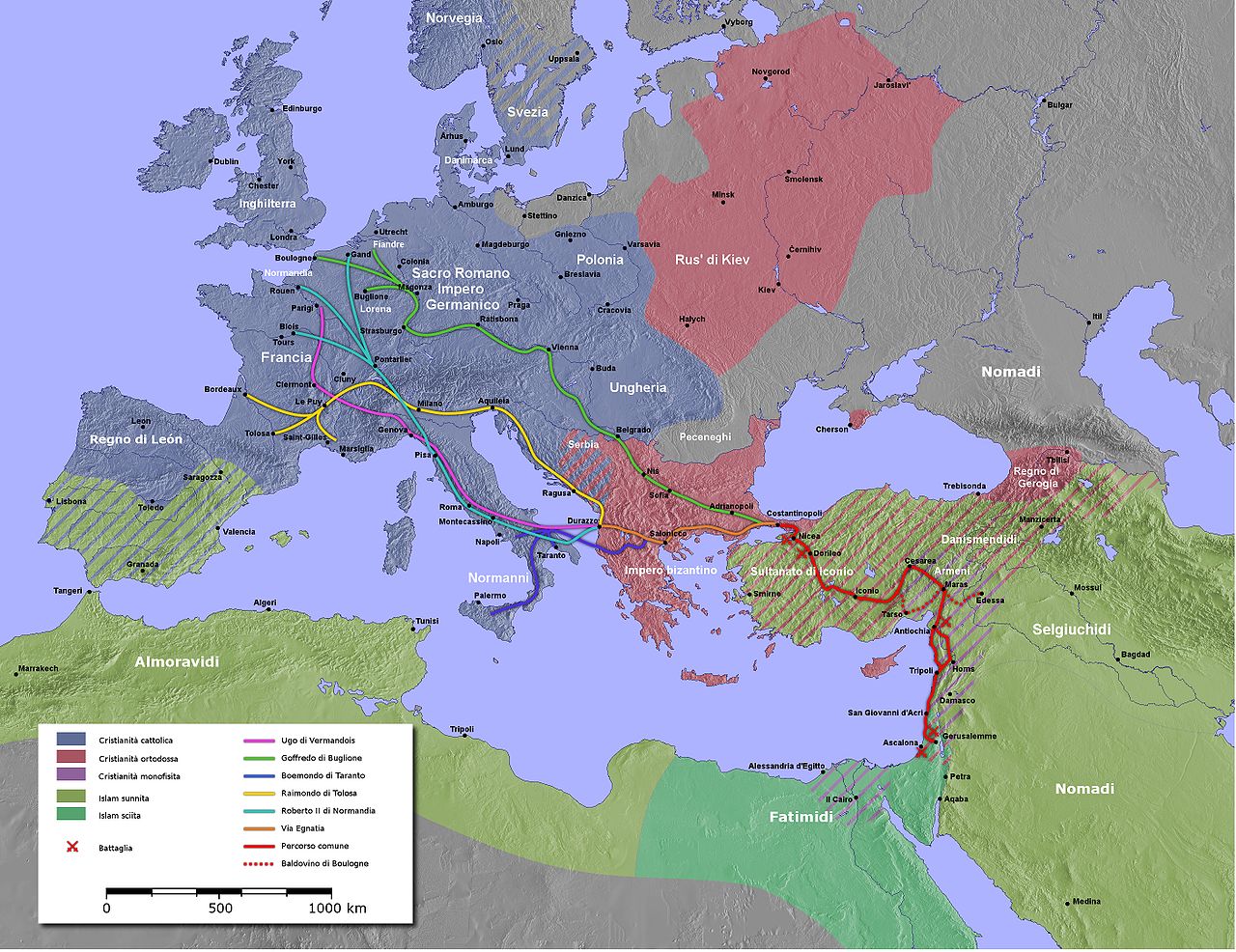
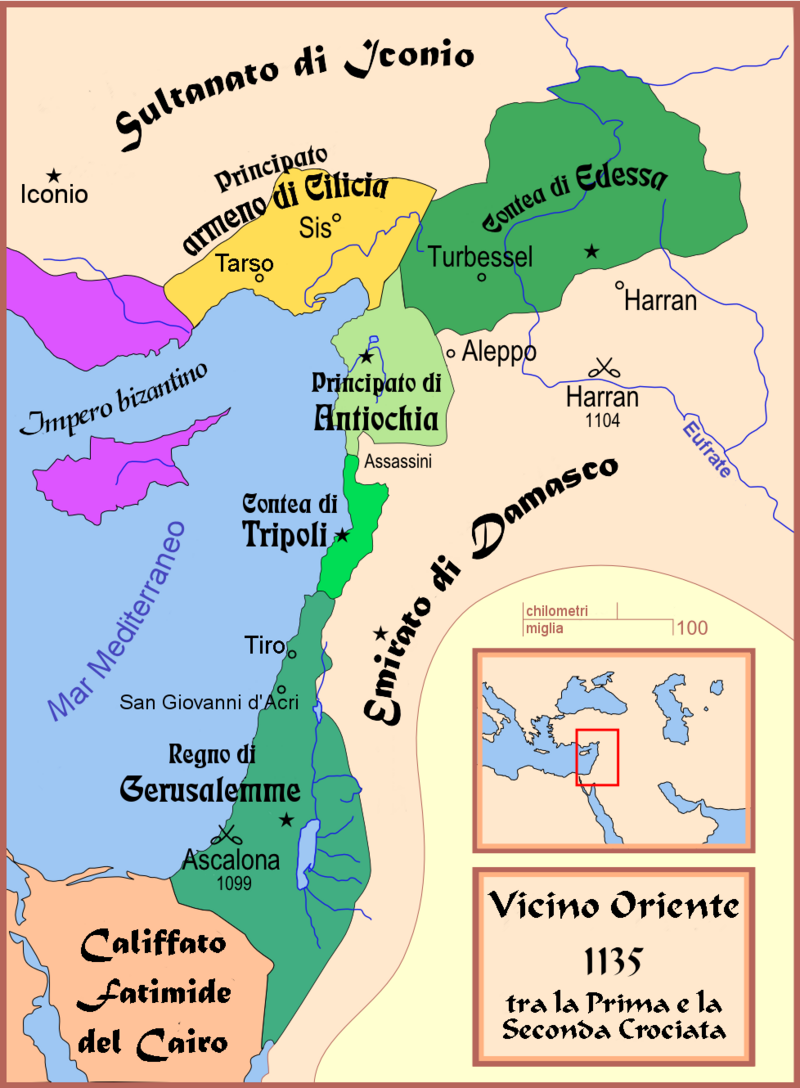
- 1099: The First Crusade ended with the conquest of Jerusalem by the Christian expedition. After over a month of siege, the crusaders entered the city and massacred the Muslims and Jews living there. Historically, there were at least nine crusades, although some were not in the Holy Land.
- 1099-1291: Kingdom of Jerusalem.
- 1187: Saladin reconquered Jerusalem. The conquest was much less bloody than the Christian conquest in 1099. After long negotiations, many citizens were allowed to leave the city by paying a ransom without being killed or enslaved.
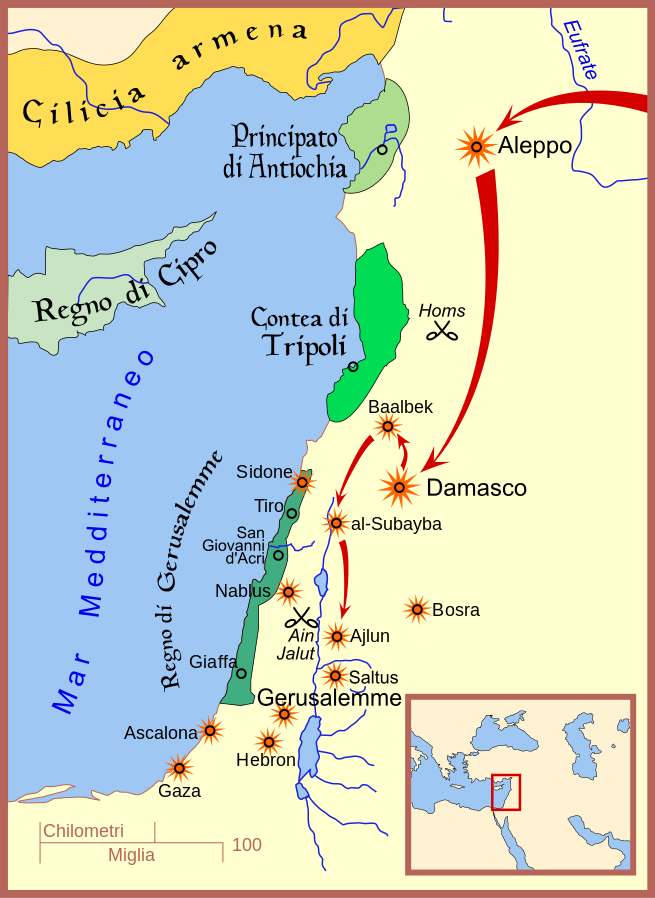
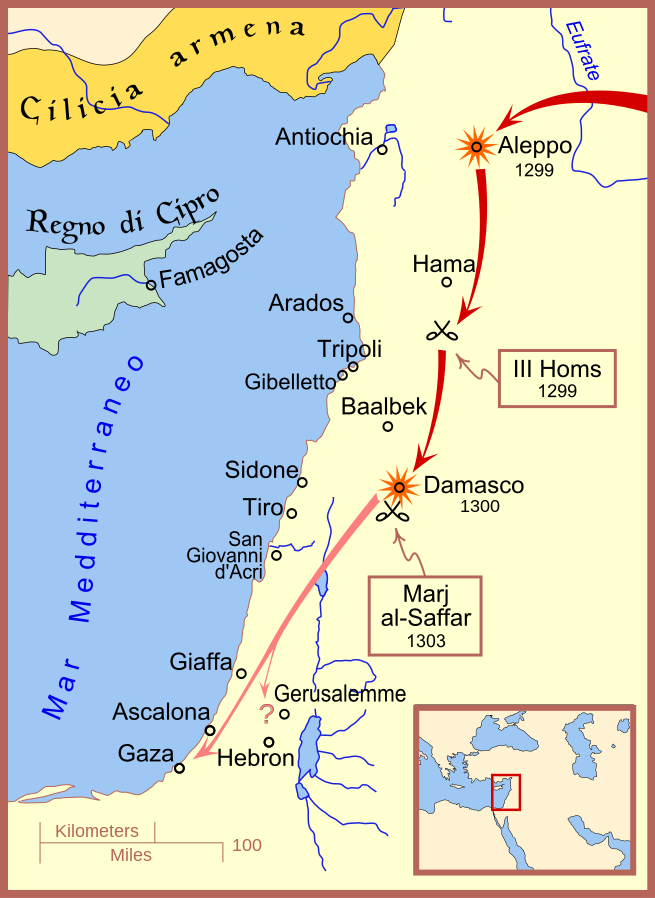
- 1260, 1271, 1299, 1300: During these years, there were Mongol incursions that even occupied some cities in Palestine and reached Gaza.
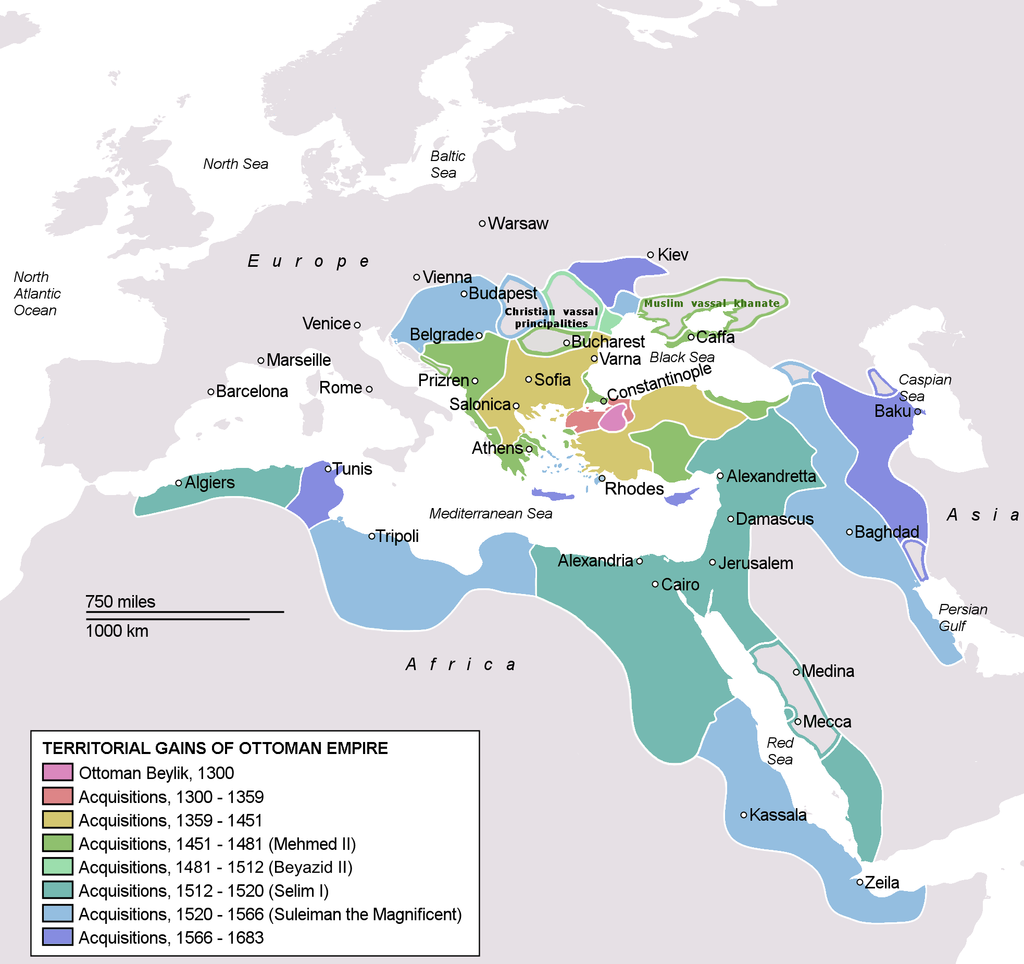
- 1512-1917: Under Sultan Selim I, Palestine became part of the Ottoman Empire (1299-1922) until the end of World War I [23].
- 1897: Theodor Herzl and Max Nordau founded the Zionist movement aiming to promote the creation of a free and independent state of Israel in Palestine.
- 1881-1891: During this period, Jews living in the so-called “resistance zone” in Russia were victims of pogroms, i.e., popular riots and unjustified persecutions. Historically, Jews have often been victims of pogroms worldwide.
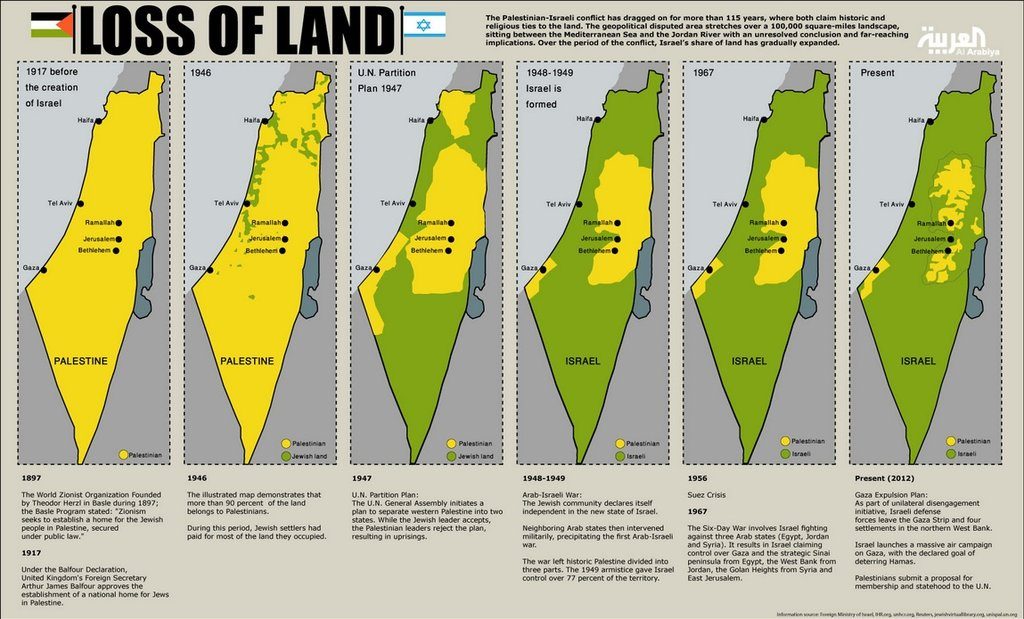
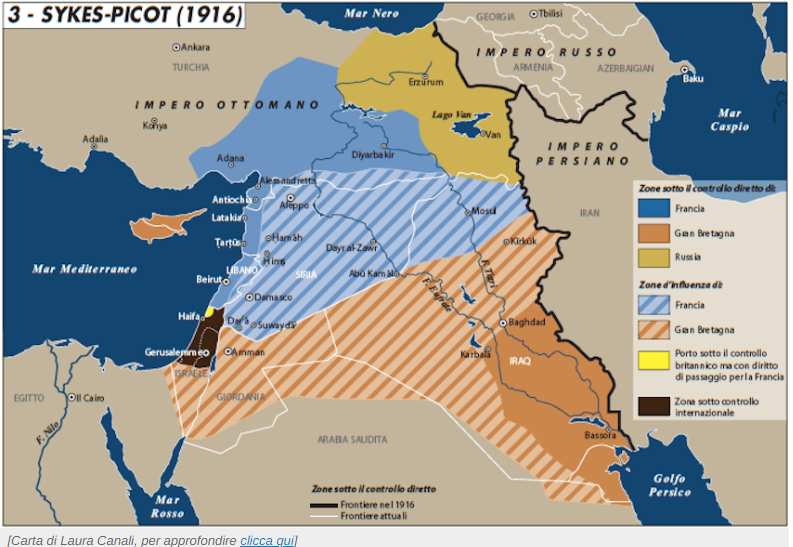
- 1917: The Ottoman Empire was defeated in World War I, and Palestine became a British protectorate. The Balfour Declaration was a document in which the British Prime Minister expressed support for the establishment of “a national home for the Jewish people” in Palestine. At the same time, the British promised the existing population self-determination.
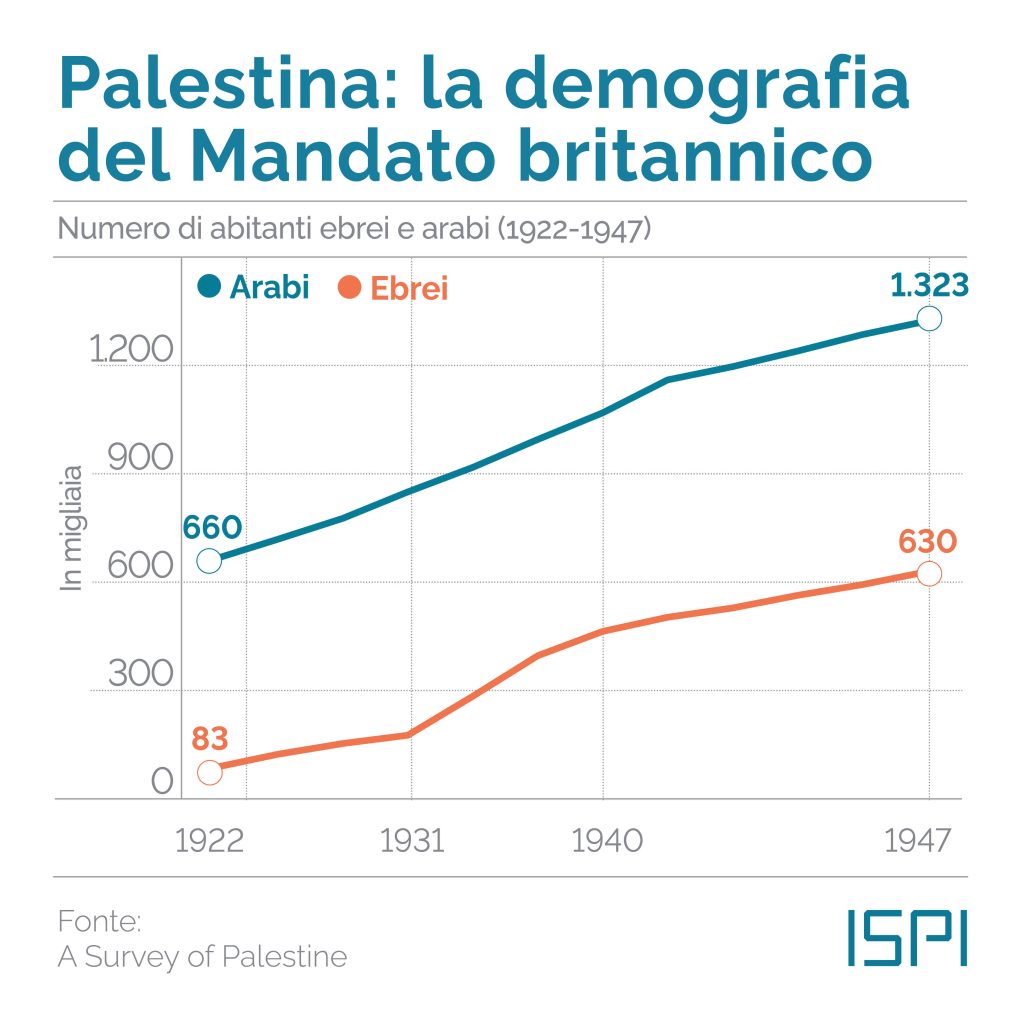
- 1922: The Jewish population in Palestine was about 84,000 compared to 590,000 Muslim Arabs and 71,000 Christian Arabs.
- 1929: The increasing Jewish immigration to Palestine began to worry Palestinians and led to the rise of Arab-Palestinian nationalism, culminating in an Arab revolt with violent clashes causing the deaths of 133 Jews and 116 Palestinians.
- 1933-1945: Shoah [20].
- 1945: The League of Arab States was founded, a political international organization of North African and Arabian Peninsula states (Saudi Arabia, Egypt, Jordan, Iraq, Lebanon, Syria, and Yemen).
- 1936-1939: Another revolt; Arabs protested against British policies favoring Jewish migration and demanded independence.
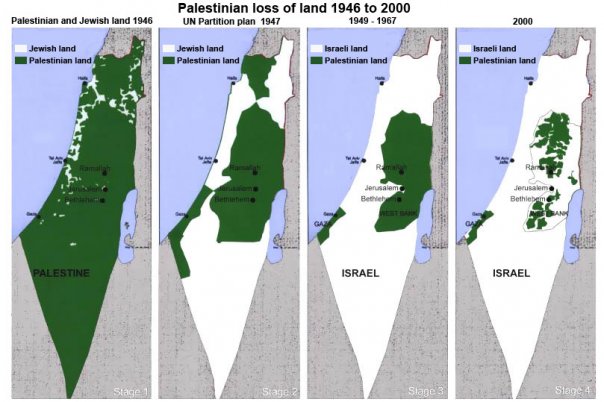
- 1947: After World War II, the British relinquished their mandate and handed the region over to the UN, which with Resolution 181 promoted the creation of a Jewish state on 56% of the territory and an Arab state on the remainder, despite the Palestinian population being much larger than the Jewish one at the time. Jerusalem was to have a special international regime. The Jews accepted the resolution; the Arabs did not.
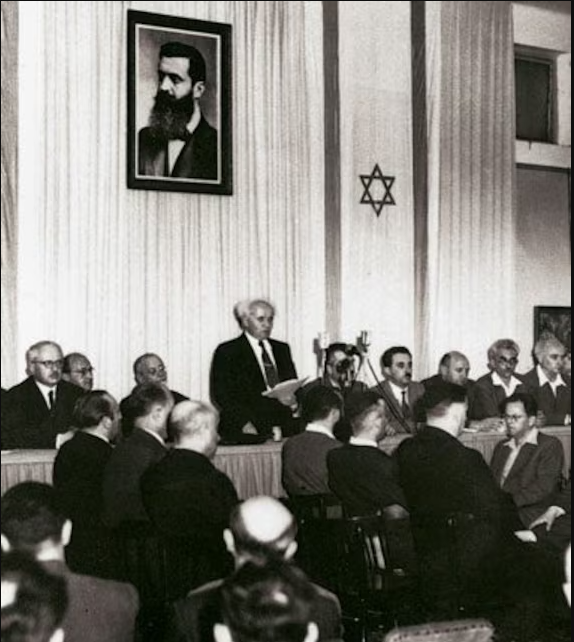
- May 14, 1948: The president of the Jewish National Council, Ben Gurion, proclaimed the founding of the State of Israel.
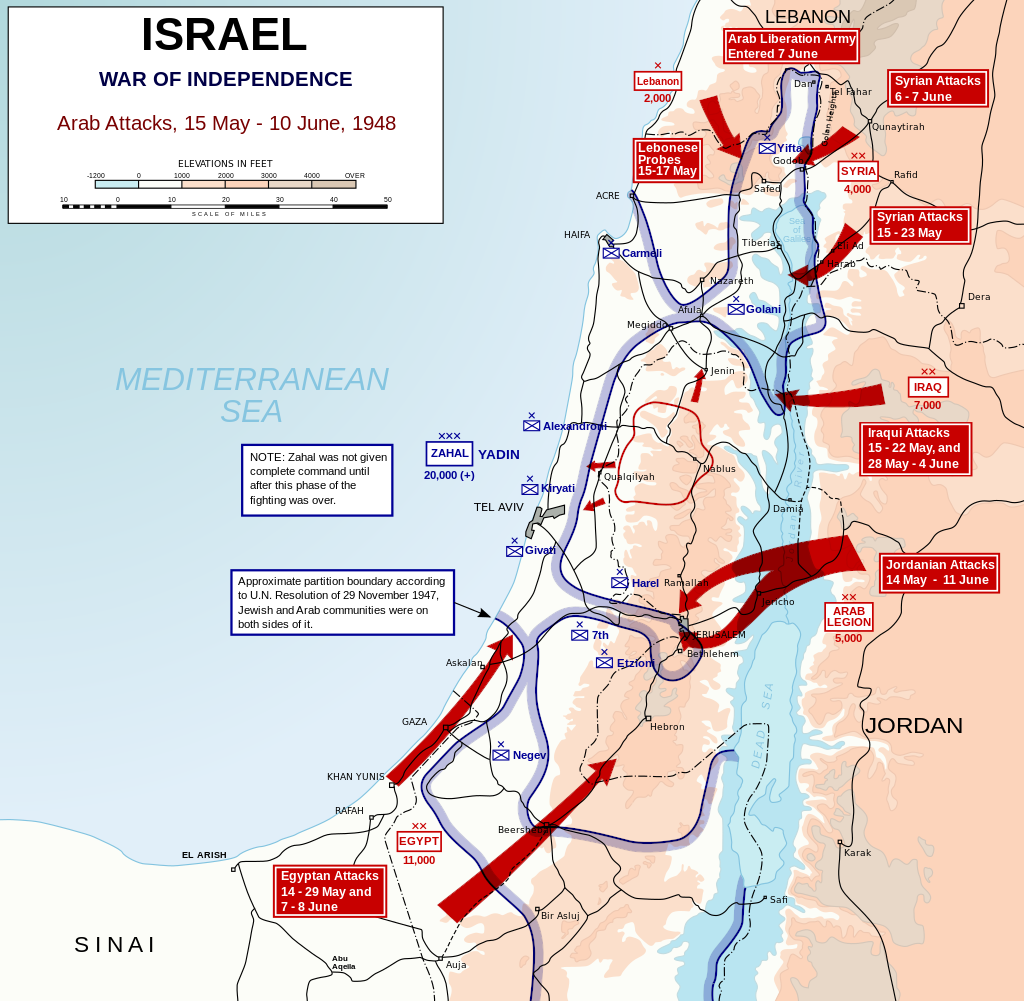
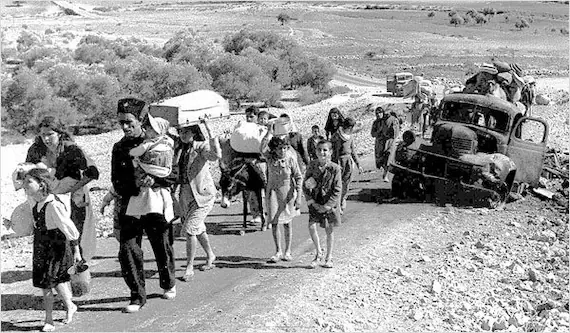
- 1948-1949: Troops from Egypt, Transjordan, Syria, Lebanon, and Iraq came to aid the Palestinians and attacked Israel. Israel repelled the attacks and forced an armistice. At the end of the conflict, Israel controlled 78% of Palestine. The remaining territories did not remain with the Palestinians; the Gaza Strip was occupied by Egypt and the West Bank by Jordan. Over 700,000 Palestinians were expelled or fled their lands. This immense catastrophe was later called the Nakba by the Arabs and is commemorated annually on May 15. The same day, Jews celebrate their independence.
- 1948: UN Resolution No. 194.
- 1959: Al Fath was founded: a Palestinian paramilitary organization aimed at armed struggle against the State of Israel; it joined the PLO in 1967.
- 1964: The PLO (Palestine Liberation Organization) was founded, aiming to liberate Palestine through armed struggle.
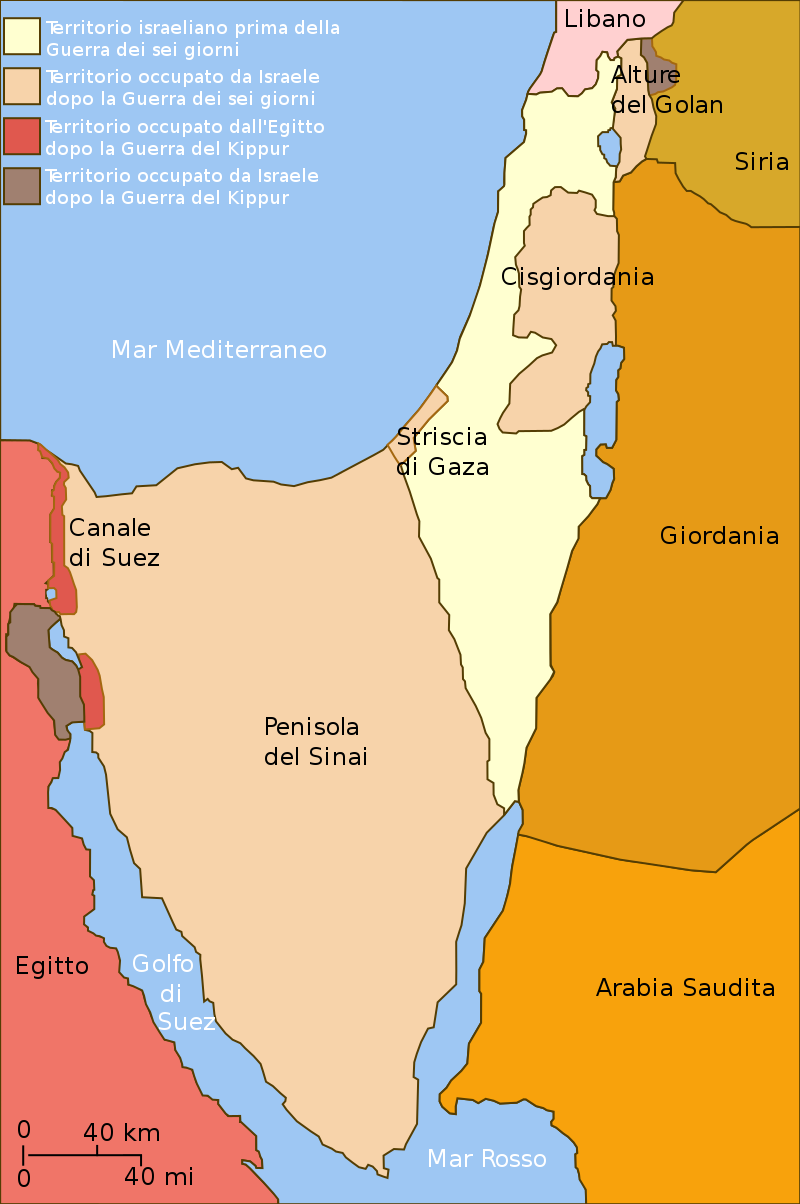
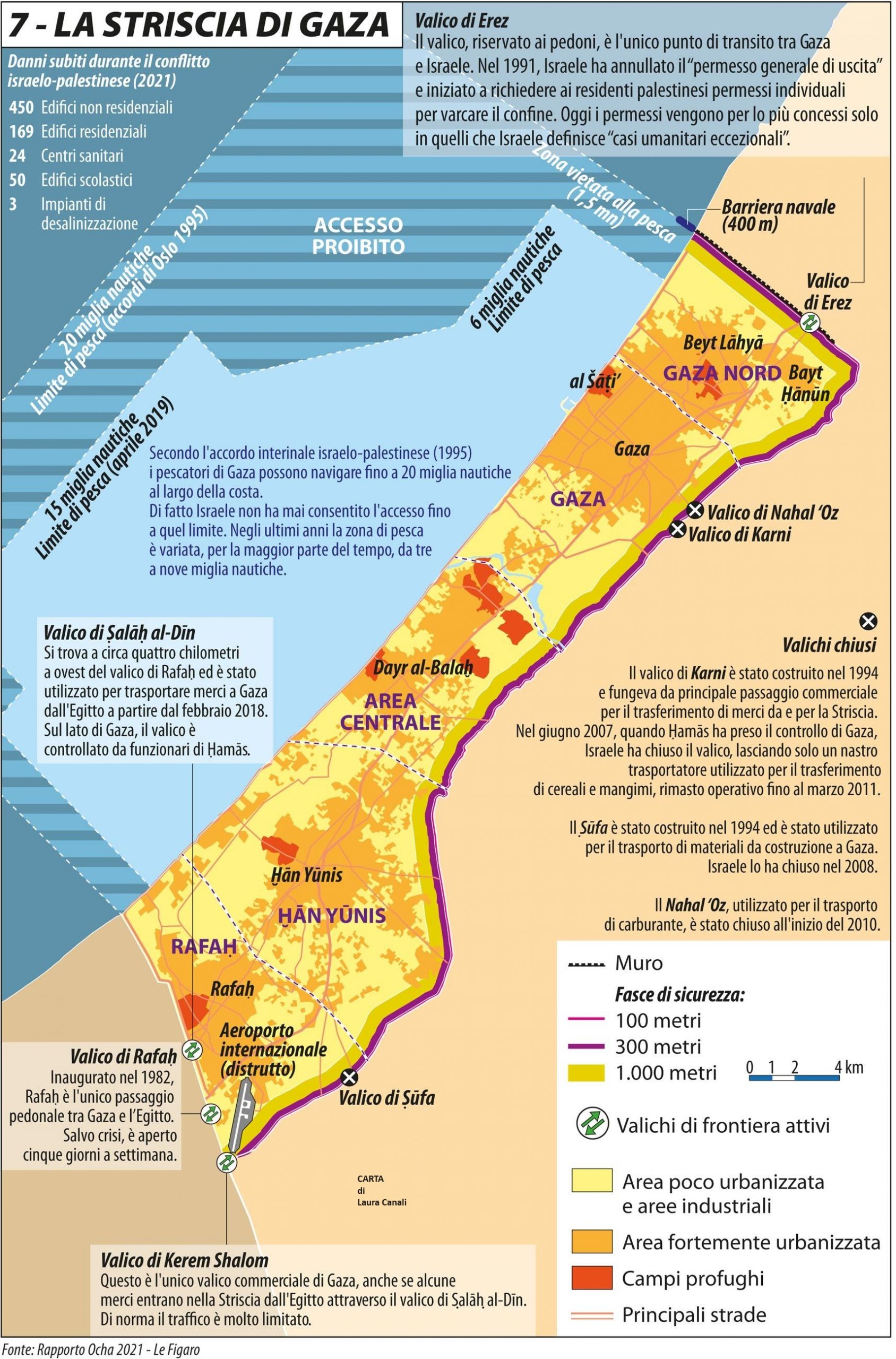
- 1967: Six-Day War. War fought between Israel and Egypt, Syria, and Jordan (supported by troops from Iraq, Saudi Arabia, and Lebanon). The war lasted from June 5 to June 10. The Arab armies were defeated, and Israel occupied the Gaza Strip, the West Bank, the Sinai, East Jerusalem, and the Golan Heights.
- 1967: UN Resolution No. 242.
- 1973: Yom Kippur War.
- 1973: UN Resolution No. 338.
- 1978: Camp David Accords. Under pressure from U.S. President Jimmy Carter, Egyptian President Anwar al-Sadat and Israeli Prime Minister Menachem Begin signed agreements leading to the 1979 Israel-Egypt peace treaty and the withdrawal of Israeli troops from Sinai.
- 1987-1993: First Intifada. A mass uprising against Israeli occupation affecting Gaza, West Bank, and East Jerusalem. In 1987, Hamas (Islamic Resistance Movement) was founded, a Palestinian political and paramilitary organization, Islamist, Sunni, and fundamentalist, promoting jihad (holy war) against Israel and aspiring to the elimination of the State of Israel and the establishment of an Islamic State.
- 1988: Arafat declared Palestine an independent state and assumed the title of President of Palestine.
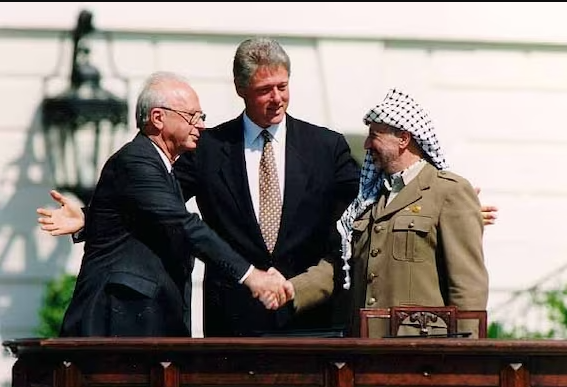
- 1993: Yitzhak Rabin and Yasser Arafat (PLO president) signed the Oslo Accords establishing the PNA (Palestinian National Authority) to govern, in a limited way, the West Bank and Gaza Strip. The PLO politically recognized the State of Israel.
- 2000: Camp David Summit. A summit held between U.S. President Bill Clinton, PLO President Yasser Arafat, and Israeli Prime Minister Ehud Barak. Under pressure from President Bill Clinton, Ehud Barak offered Yasser Arafat a Palestinian state including the West Bank and Gaza Strip with East Jerusalem as capital, the return of a limited number of refugees, and compensation for others. In a highly criticized move, Arafat rejected Barak’s offer without presenting counterproposals. Probably, Arafat’s choice was motivated by an attempt to curb the growing influence and success of Hamas.
- 2000: Second Intifada. Arab revolt against Israeli occupation starting in Jerusalem and spreading throughout Palestine.
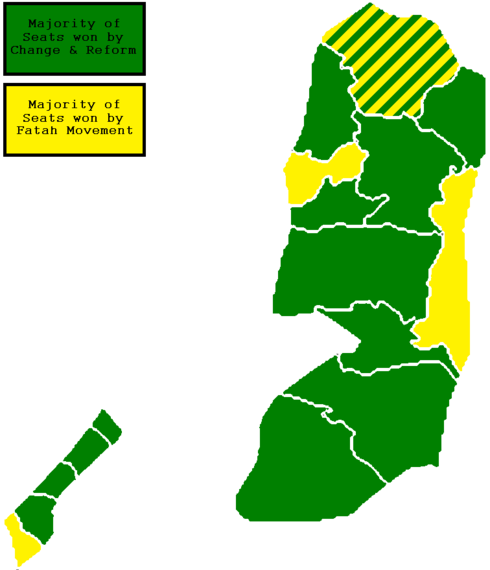
- 2006: Hamas won the legislative elections.
- 2007: Civil war in the Gaza Strip between Hamas and Al-Fatah.
- October 7, 2023: Hamas attack on Israel and Israel’s response with bombings on the Gaza Strip.
Notes
* It should be clarified that Hamas is actually a terrorist group pursuing Islamic Jihad with the goal of annihilating the State of Israel and creating an Islamic state. It is wrong to think that Hamas fights for Palestinian rights.
Photo Gallery***
Photos found on Google Images:
*** The images in the article and photo gallery are taken from Google Images. We cannot verify copyright or trace the authors. If an author notifies us, we will gladly indicate the source or remove the image if requested. You can use the site’s contact form for such notifications.
Sources and References:
- [1] Jericho on Wikipedia.
- [2] Who are the Jews by Jared Diamonds.
- [3] The Birth of the State of Israel by Nova Lectio.
- [4] Palestine on Wikipedia.
- [5] The Historical Reasons of the Israeli-Palestinian Question. Why are they at war? by Geopop.
- [6] From Abraham to Moses by Maestra Viola.
- [7] Did the Kingdom of Israel Never Exist? by Alessandro Barbero.
- [8] The State of Israel on the Israeli Embassy in Italy website.
- [9] Hamas on Wikipedia.
- [10] History of the Ancient People of Israel by Francesco Sandroni.
- [11] Merneptah Stele on Wikipedia.
- [12] Canaan on Wikipedia.
- [13] Philistines on Wikipedia.
- [14] 3D Reconstruction of the First Temple of Jerusalem, Solomon’s Temple.
- [15] 3D Reconstruction of the Second Temple of Jerusalem, destroyed by the Romans.
- [16] The Longest War in the World by Ugo Tramballi.
- [17] Arab-Israeli Conflict on Wikipedia.
- [18] Jewish Diaspora on Wikipedia.
- [19] Jews on Treccani Encyclopedia.
- [20] Holocaust or Shoah on Wikipedia.
- [21] Israel-Palestine Escalation: 12 Charts to Understand How We Got Here by the ISPI MENA Observatory.
- [22] The Crusades on Wikipedia.
- [23] Expansion and Collapse of the Ottoman Empire on Limes Online.
- [24] Israel also Bombards the Southern Gaza Strip on Limes Online.
- [25] Demography: Jews and Palestinians, Equivalent Numbers by Giorgio Gomel.
- [26]The Borders of the Middle East after World War I on Limes Online.
*** Note: This article was automatically translated using a workflow created with n8n and OpenAI. The original version of the post is the Italian one.