
“What is life!” my elderly aunt often sighed, referring to its fleeting nature, the chance that often influences it, and all those pleasant or unpleasant unforeseen events that affect it. Her statement was actually more of an assertion than a question. Indeed, there is an exclamation mark. In the title of this post, however, there is a clear question mark because what I am asking is a genuine, very precise question.
What is a living being? When can something be considered alive and when not? We humans are certainly living beings, as are all other animals, but can a clear separation be established for other things? Is a rock a living being? Is a fir tree a living being? A virus? A bacterium? An alga? A system driven by artificial intelligence?
This seems to me a very interesting topic to reflect on and from which to start other subsequent considerations. Since I am not a biologist, I will refer only to official definitions and the opinions of people more expert and competent than me in the field.
The first definition is that of NASA, which, among other things, deals with the exploration and study of planets and celestial bodies and at some point had to face the problem of how to define and interpret possible forms of life found in these places. In short, NASA’s definition is as follows:
“Life is a self-sustaining chemical system capable of Darwinian evolution” [1]
However, NASA itself admits that this definition derives from our experience and the characteristics of life on Earth; in practice, it is not certain that life elsewhere could have very different characteristics. ****
The Israeli biophysicist of Russian origin Edward Trifonov is much more concise:
“Life is self-replication with variation” [2]
For the Austrian physicist Erwin Schrödinger, the definition is:
“Life is an open thermodynamic system, capable of autonomously maintaining itself in a steady-state energetic disequilibrium and capable of directing a series of chemical reactions toward the synthesis of itself” [6]
For Peter M. Hoffmann, the definition is:
“A complex, open, dissipative system, rigidly controlled and close to equilibrium” [13]
Admitting that the complexity of life forms is highly variable and that it is very difficult to arrive at a unique definition, from all these definitions certain precise properties emerge that characterize living beings [5][2]:
- Homeostasis (O): It is a mechanism of self-regulation, by which an organism, as external conditions vary, produces chemical reactions that lead it to an internal thermodynamic equilibrium. This is practically the definition of an open system.
- Metabolism (M): It is a set of chemical transformations that serve to manage an organism’s energy, consuming it to produce organic matter (anabolism) or producing it from organic matter (catabolism).
- Autonomous reproduction (R): It is the process by which organisms called parents produce new organisms of the same species called offspring. The forms in which this can occur are multiple, but all are based on two elementary mechanisms: mitosis or meiosis.
- Evolution (E): It is the appearance of new traits that can be inherited and occur causally due to genetic mutations. These new traits are then favored or disfavored by phenomena such as natural selection or genetic drift.
- Organic matter (OM): It is mainly composed of molecules of hydrogen (H – 63%), oxygen (O – 24%), carbon (C – 10%), nitrogen (N – 1.4%), phosphorus (P – 0.2%), and sulfur (S – 0.1%). [7]
- Response to stimuli (RS): A living being, when subjected to stimuli or perceptions, processes them in a more or less complex way and acts accordingly, for example by modifying its state, position, or behavior.
- Life cycle (LC): A living organism is subject to a cycle consisting of birth, growth, and death phases.
Based on these properties, we could try to classify various candidates for the status of “living being”:
| Entity/Property | Homeostasis | Metabolism | Reproduction | Evolution | OM | Response | LC |
| Human (MAMMALS, ANIMALS) | X | X | X | X | X | X | X |
| Fir Tree (PLANTS) | X | X | X | X | X | X | X |
| Rock (STONES, ROCKS) | – | – | – | – | – | – | – |
| Virus | – | – | – ** | X | X | – | – |
| Computer Virus | – | – | X | – | – | X | – |
| Bacterium | X | X | X | X | X | X | X |
| Robot equipped with sensors, actuators, and AI | X | X | – | – | – | X | – |
| A planet or celestial body | |||||||
| Paramecium * | X | X | X | X | X | X | X |
| Fungi | *** | X | X | X | X | X | X |
| Algae | X | X | X | X | X | X | X |
From this table, which I hope I have compiled correctly (any feedback is welcome), it emerges that life forms have very different complexities and that sometimes the line between living and non-living is very thin. Even a bacterium or a paramecium (a unicellular organism) can be considered living beings, which makes the topic very interesting and raises many other questions.
Other questions:
- Is it possible to establish some hierarchy among the various forms of life?
- How did life originate?
- How was it possible that from the inorganic matter initially present in the Universe living systems originated? This process is called abiogenesis.
- Are there intelligent life forms? We humans, for example, consider ourselves intelligent beings and consider some other animals as such, but what is meant by intelligence?
- Are plants intelligent?
- Do humans have something more compared to other forms of intelligent life?
- If yes, how and when did humans acquire this characteristic?
- What differences are there between a chimpanzee and a human? And between one of our prehistoric ancestors (e.g., australopithecus or homo erectus) and us?
I will try to understand what answers science has given to these questions in subsequent posts.
Legend:
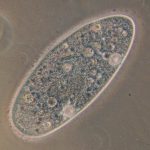
* Paramecium: It is a protozoan, a unicellular little animal about one-tenth of a millimeter long. Paramecia are characterized by the presence of cilia, small movable hairs, covering their outer surface and allowing them to move in an aquatic environment. [10]
** Virus: Viruses cannot reproduce on their own; they need a host cell.
*** Fungi: At the moment, I have not found references to the fact that homeostasis can be discussed for fungi. To be checked. However, they are considered living beings from a biological point of view.
**** This is discussed in [12]; in this article, the position of Stuart Bartlett, a Caltech researcher, is recalled. He proposed using the term “vyta” for life forms different from those we know, defined as “any system that satisfies all four processes of the living state,” that is: “dissipates energy (for example, by eating and digesting); exploits self-sustaining chemical reactions to make copies of itself at an exponential rate, maintains internal conditions as external conditions change, and acquires information about the environment which it then uses to survive.”
Sources and references:
- [1] About Life Detection on Astrobiology at NASA.
- [2] Origin of Life on the G.M.P.E. website.
- [3] The Unresolved Questions of Evolution. What Is the Origin of Life? by Sofia Belardinelli on IlBoLive.
- [4] At the Origin of Life: What We Have Discovered in One Hundred Years of Science by Massimo Pigliucci.
- [5] Definition of Life on Wikipedia.
- [6] What Is Life? The Living Cell from a Physical Point of View by Erwin Schrödinger, Adelphi.
- [7] MITx 7.00x Introduction to Biology – The Secret of Life by Eric S. Lander.
- [8] Mitosis and Meiosis on Wikipedia.
- [9] Natural Selection and Genetic Drift on Wikipedia.
- [10] Irriducibile by Federico Faggin, Mondadori.
- [11] Modern Synthesis of Evolution on Wikipedia.
- [12] Life as We Don’t Know It by Sarah Scoles, Le Scienze n. 656, April 2023 – original article.
- [13] The Gears of God, Peter M. Hoffmann – Bollati Boringhieri.
*** Note: This article was automatically translated through a workflow created with n8n and OpenAI. The original version of the post is the Italian one.