
Ancestors
Over the past few years, I have read several books for pleasure about the history of human evolution. It is a fascinating topic and a field of knowledge that has reached very high levels of complexity and progress over the years thanks to a multidisciplinary approach and the contribution and collaboration of scientists and scholars from various disciplines.
One of the questions that prompted me to dedicate some of my free time to these readings was: “Since man has not always existed, and over the history of our planet there have been forms of life increasingly closer to ours, from when can we consider ourselves human?”
I know it’s a simple question, perhaps a bit superficial, and probably without an answer. In fact, it might not even make sense to ask this question, and perhaps that’s why it had taken a back seat recently due to the emergence of other, somewhat more sensible questions. However, it came back to my mind a few days ago when, by chance, I came across a video of a lecture by Prof. Guido Barbujani on a similar topic [15].
So I started gathering notes, still in progress and hopefully not containing too many errors, to try to define a list of our ancestors and their main characteristics with the aim of identifying the period when we acquired certain traits and skills.
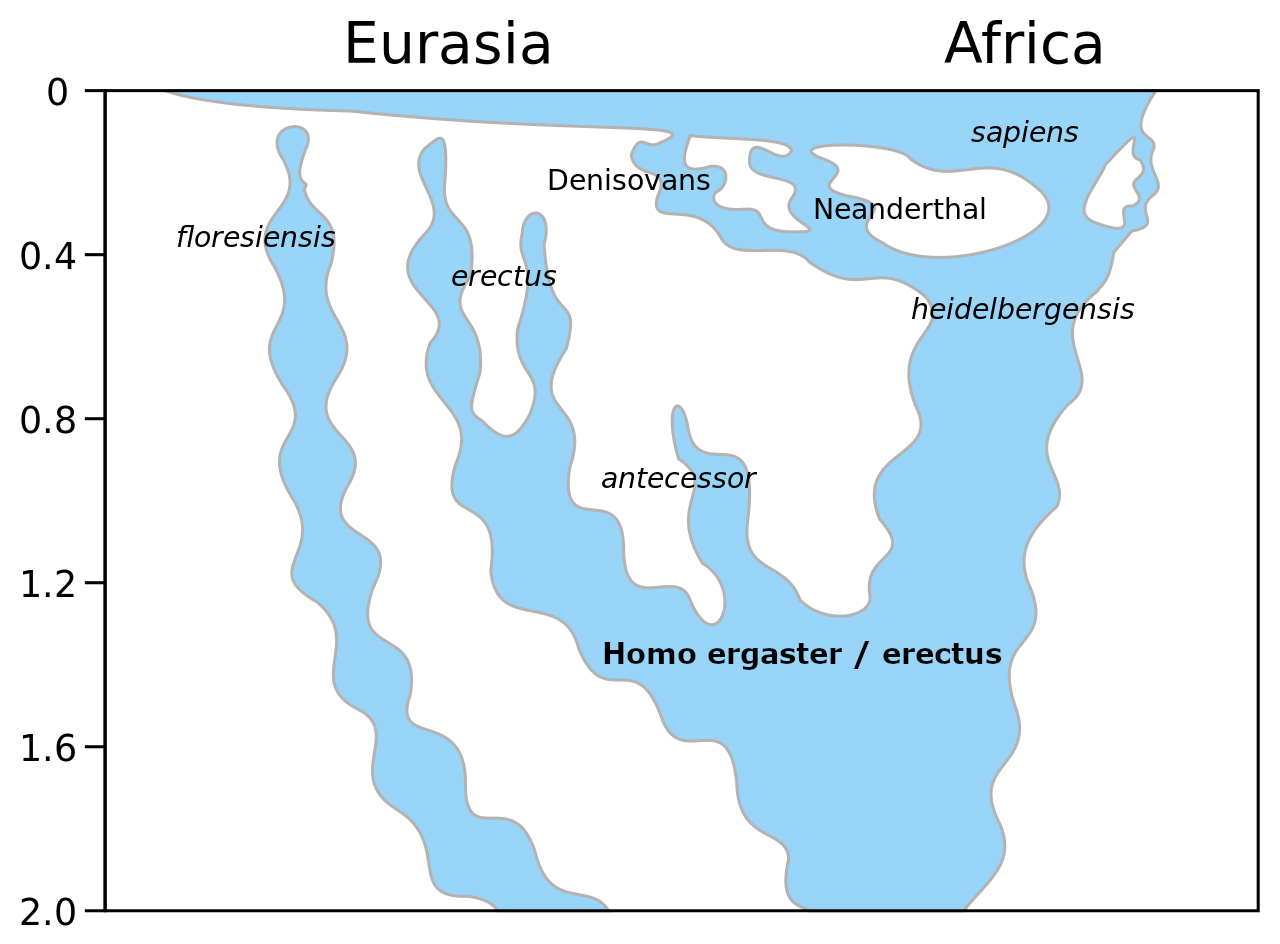
Some famous species such as Homo neanderthalensis, Homo floresiensis (hobbit), and Homo Denisova are not part of this list because they are “branches of the human evolution bush” [3] that went extinct without further offshoots. Homo erectus is also excluded because until a few years ago, this species included a very broad and heterogeneous set of fossils that have since been reclassified. Today, the African Homo erectus is referred to as Homo ergaster [2] [5], while Homo erectus mainly refers to the species that migrated to Asia during the phase called Out of Africa 1.
I wanted to give a schematic form to these notes using an Excel sheet that I shared in this file: Our Ancestors – Homo sapiens ancestors.
From a taxonomic2 point of view, all the listed species share: order (Primates), tribe (Hominini), subtribe (Hominina) but belong to different genera and species.
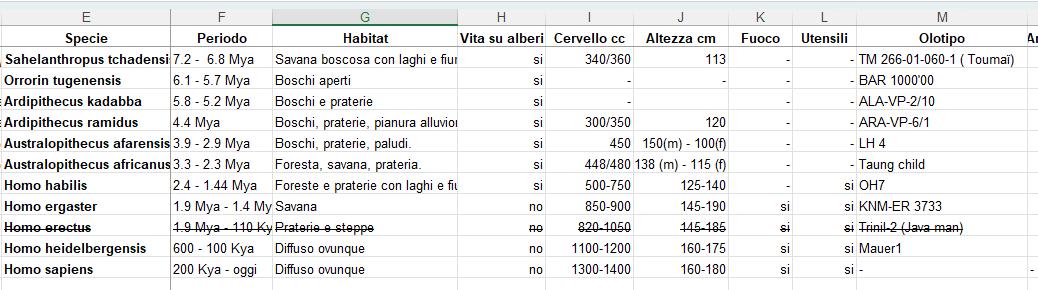
Each of the 11 rows, ordered chronologically, represents a species that can be considered an ancestor of Homo sapiens, while the columns represent the characteristics of each species.
Here is an extract of just some columns to give an idea of the file’s content:
Considerations
Some considerations arise from this scheme that represent what I believe I have understood about this topic.
We know that of all the species that existed, only ours, Homo sapiens, remains, but this does not mean that those who preceded us and went extinct were inferior, less evolved, or less adapted than ours. The fact that they existed and lived on Earth for more or less time (some even for millions of years) means they were species perfectly adapted and integrated into their environment.
Homo sapiens, defined as the “wonder and glory of the universe” [2], is actually the endpoint of a slow, gradual process governed by chance. Many factors such as time, random mutations, natural selection, isolation, genetic drift, and climate changes favored some traits over others, some species over others, leading to the gradual formation of species increasingly similar to ours.
If one still wants to try to answer the initial question, i.e., what defines from when humans can be called such, it is necessary to understand which characteristics define a human and when they were acquired. Commonly, only humans are attributed these abilities:
- bipedalism and upright posture,
- large brain size,
- ability to create tools,
- use of fire,
- use of language for communication,
- social life and cooperation to obtain food,
- forms of art, abstraction, and symbolic capacity,
- funeral rites,
- use of writing.
The first three were once thought to have been acquired roughly simultaneously, but archaeological finds tell us that bipedalism was the first achievement of hominins.
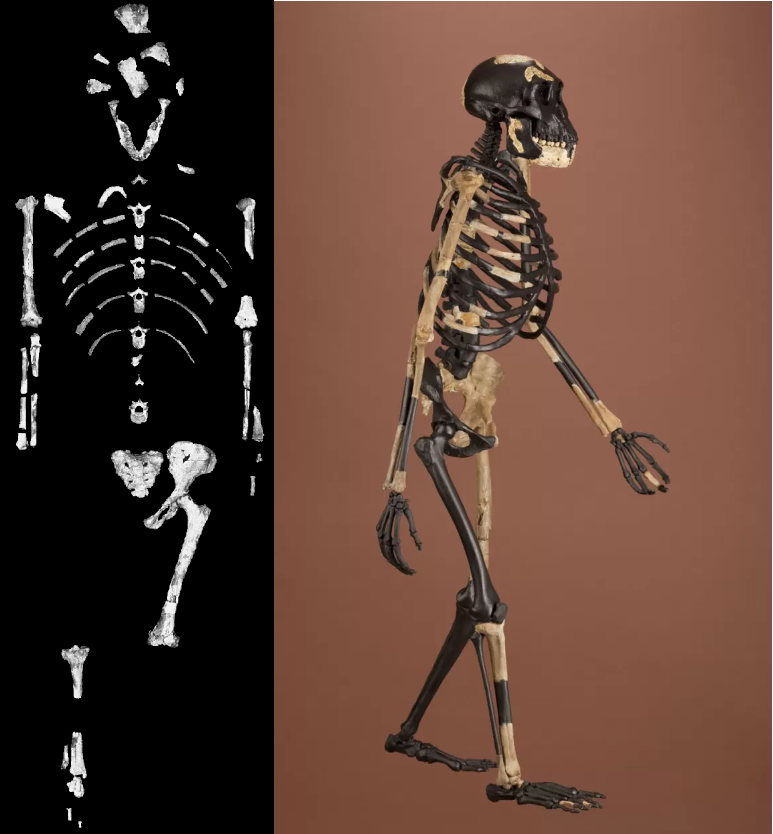
Australopithecus afarensis is considered the first individual to regularly walk on two feet [17], but it is also true that this species still spent time in trees, perhaps to seek refuge in danger or to sleep. Brain size increased over millennia, but australopithecines, for example, had brains only slightly larger than modern chimpanzees (450-480 cc versus 400 cc). Homo erectus, credited with the first migration out of Africa, had bipedal gait, feet similar to ours, and height possibly even greater than modern humans, but its brain did not exceed 1000 cc compared to about 1400 cc in Homo sapiens. Only Homo heidelbergensis, a direct common ancestor of Sapiens and Neanderthals, had a cranial capacity slightly smaller. Finally, Neanderthals, a species that went extinct, had brains even larger than the Sapiens who replaced them.
From these two characteristics alone, it is clear that depending on the parameter chosen, the choice of the first human species varies significantly.
The ability to create tools is attributed to Homo habilis, from which the name derives, so much so that the term Oldowan culture was coined to indicate all artifacts from that period. Chimpanzees can also make and use tools to obtain food, but their limitation (often called the “Sultan’s limit,” highlighted by Wolfgang Kohler’s studies on chimpanzees) is their inability to use tools to create another tool for a specific purpose. This limitation was overcome by Homo habilis, who regularly used larger stones to chip and modify other stones.
It seems difficult to identify traces of smoke and ash after hundreds of thousands of years and especially to determine if they were caused naturally or intentionally. Nevertheless, the use of fire is dated to about 400,000 years ago. At that time, the species closest to us were Homo erectus and Homo heidelbergensis.
Identifying who used language for communication is complex since language leaves no direct fossil traces. However, scholars believe language probably evolved gradually rather than suddenly. Homo ergaster, Homo erectus, and Homo heidelbergensis might have developed primitive forms of language (based on physical features deduced from fossils), but none reached the level of Homo sapiens.
Most likely, all species on the list lived in communities, but in a form not unlike what we observe in chimpanzees. Early cooperation in tool production probably began with Homo habilis, while cooperation for hunting arose when hominins started feeding on large animals, referring to Homo ergaster and Homo erectus.
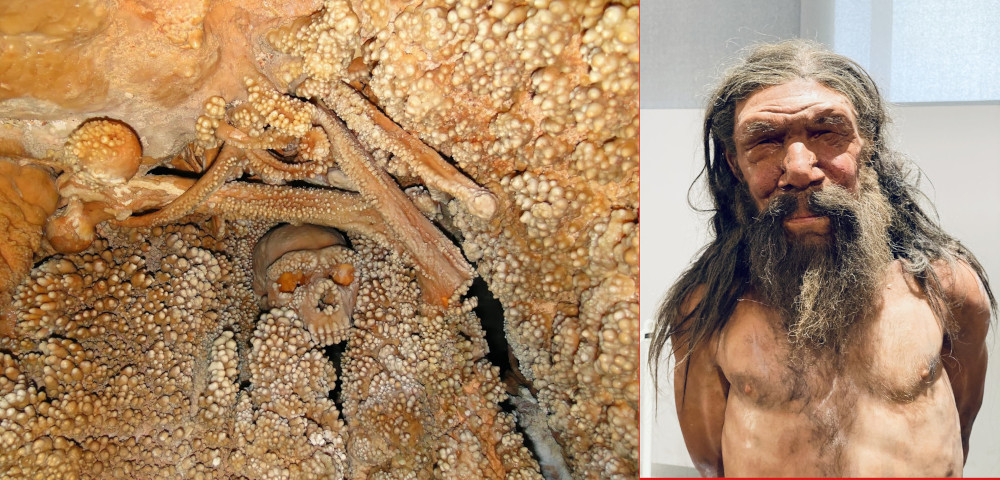
Regarding the earliest forms of art (jewelry, decorations, and cave paintings) and burial practices, evidence shows that Neanderthals practiced them. However, since they are not ancestors of Sapiens, it is possible that Sapiens developed art independently.
Writing is a recent achievement of Homo sapiens, occurring independently in different parts of the world. The ability to write marks the transition from prehistory to history.
In essence, depending on the characteristic chosen, the species named as the “first human” changes. Taxonomically, Homo habilis has been chosen, but perhaps Homo ergaster / erectus is the one we might feel closest to.
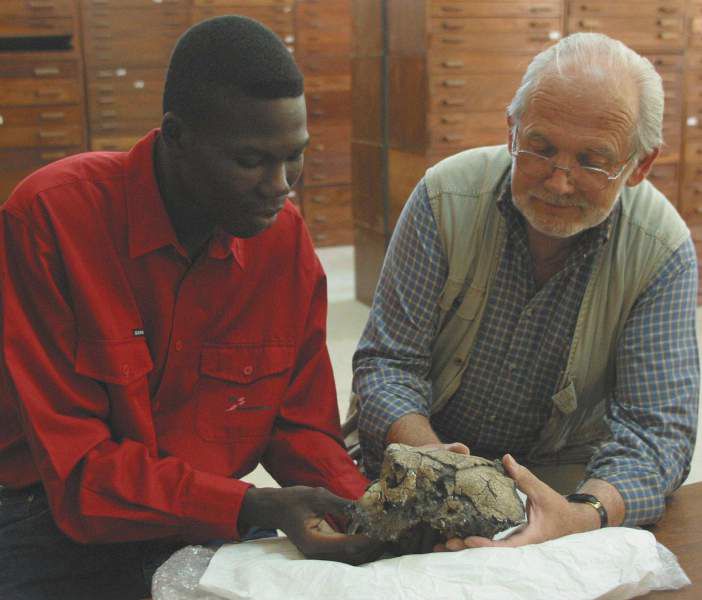
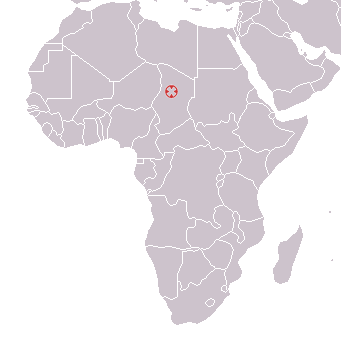
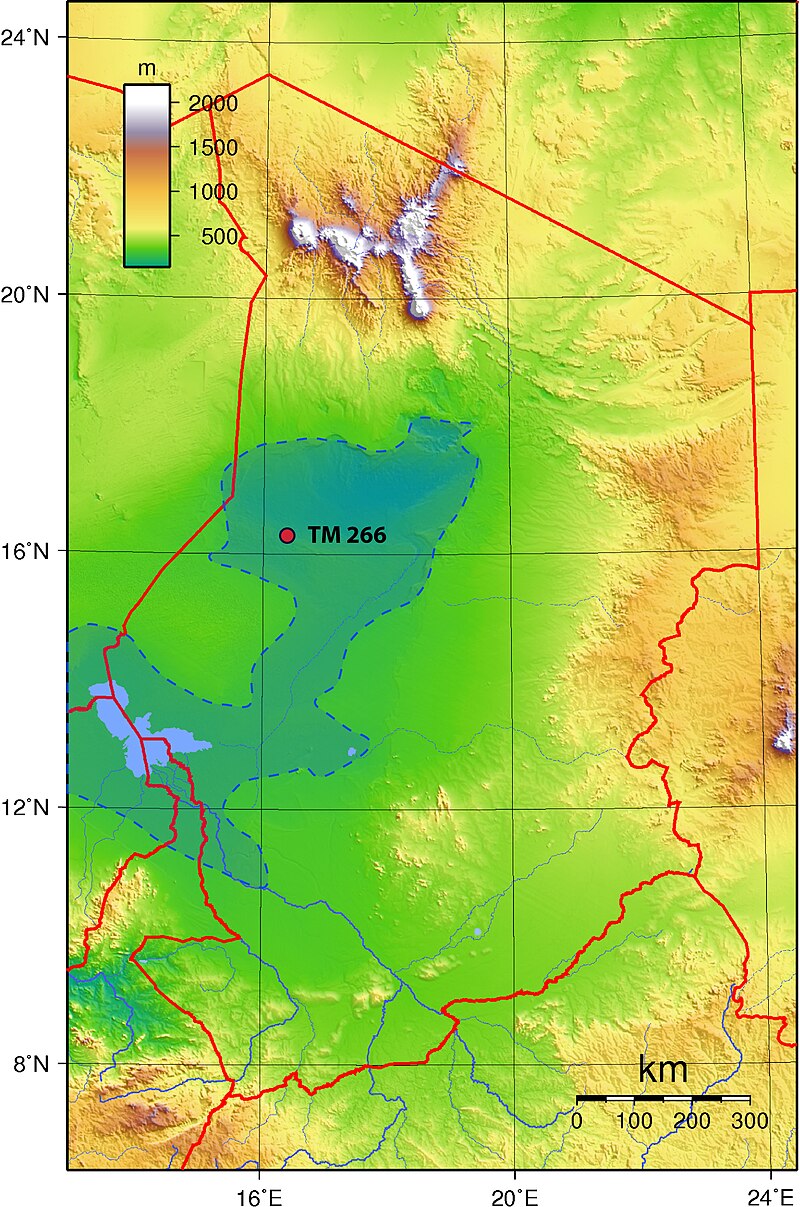
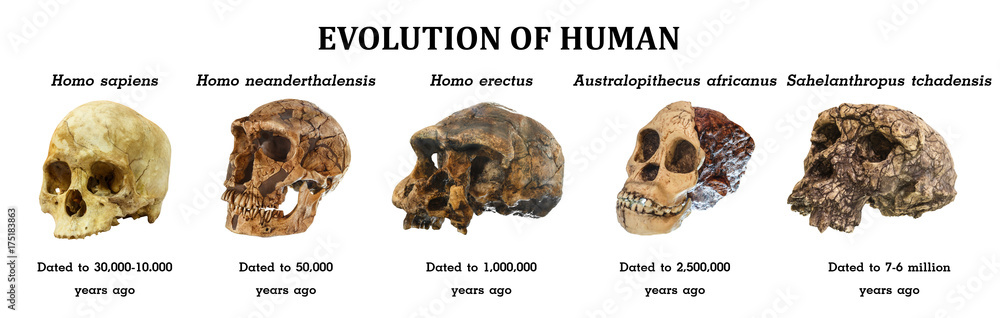
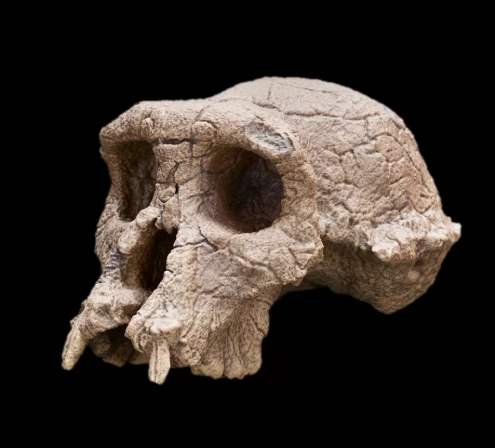
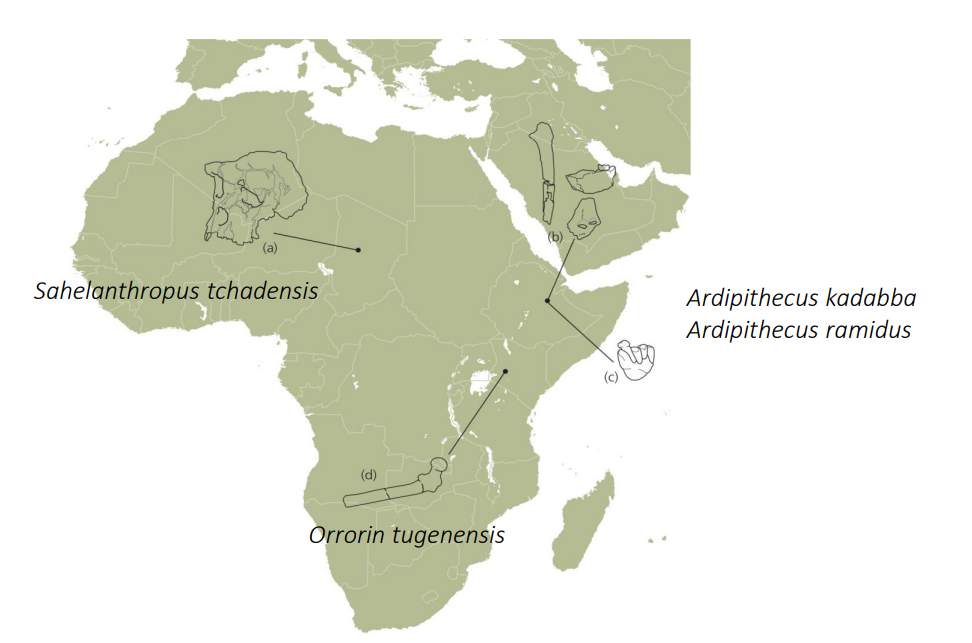
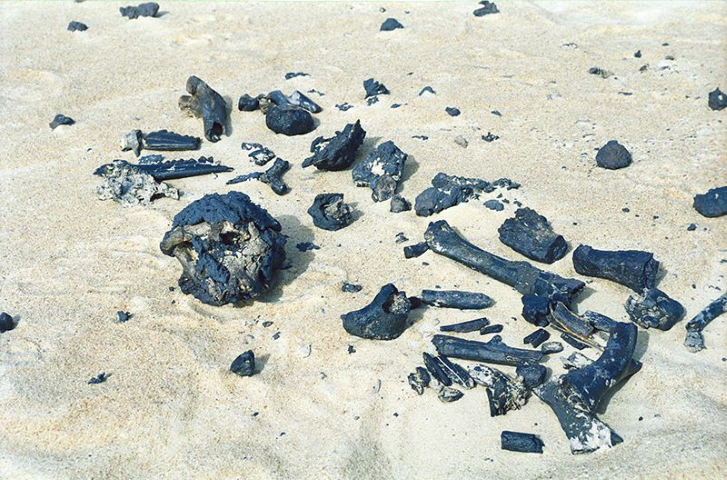
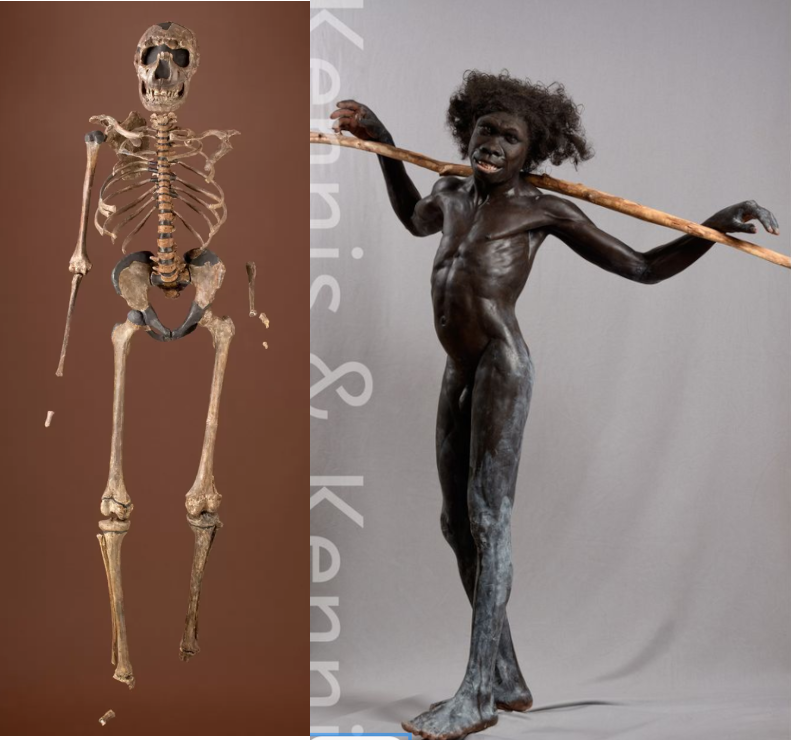
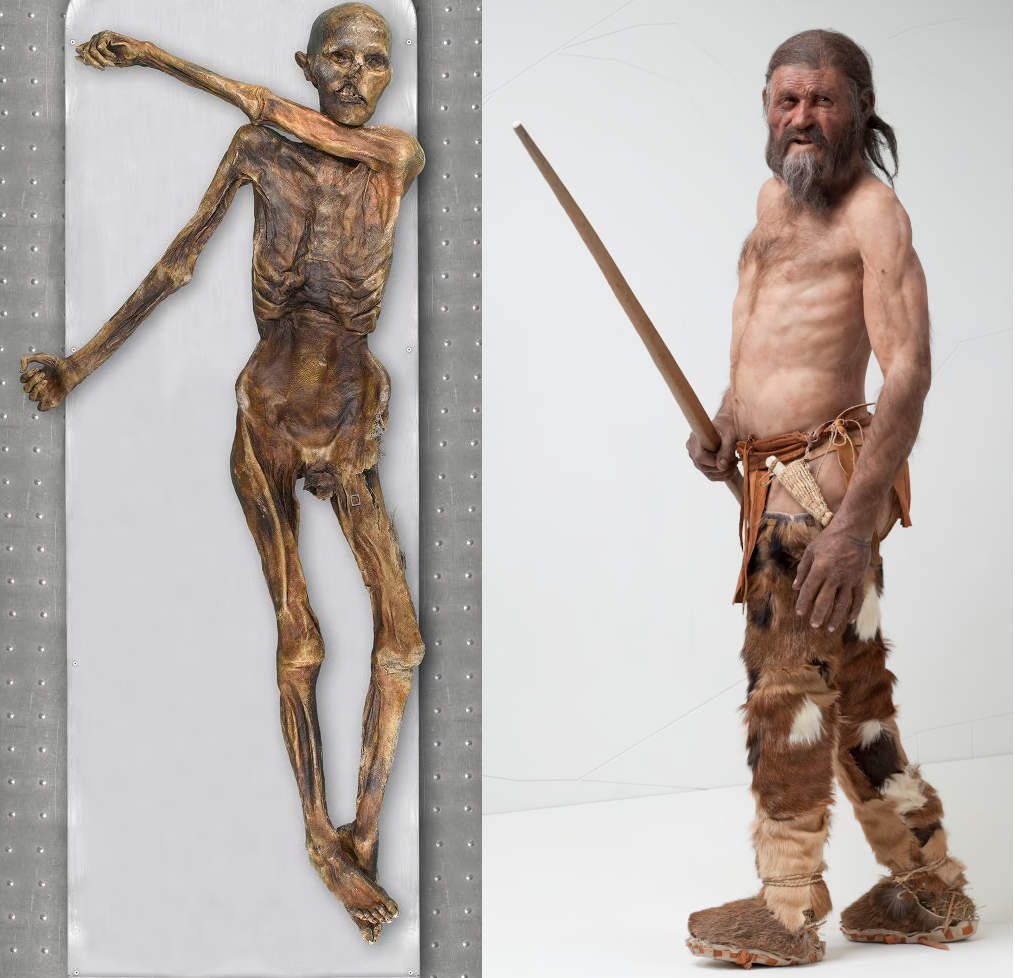
Gallery of holotypes1:
*** The images in the article and photo gallery are taken from Google Images. We cannot verify copyright or trace the authors. If an author notifies us, we will gladly indicate the source or remove the image if requested. You can use the contact form on the site for such notifications.
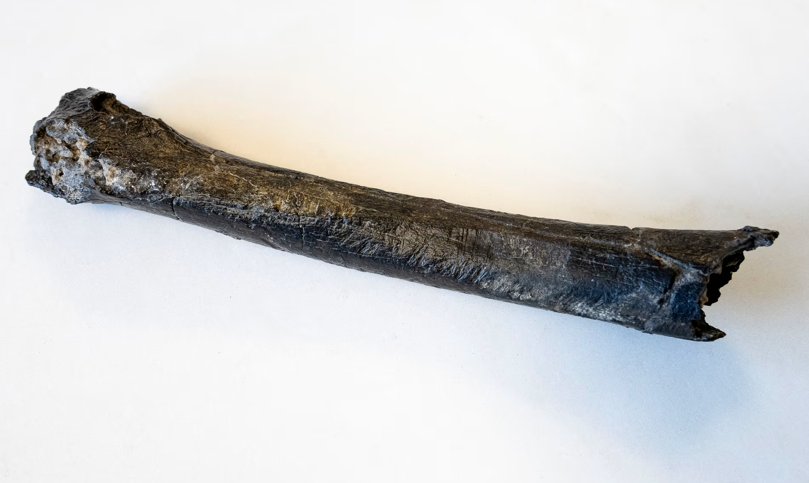
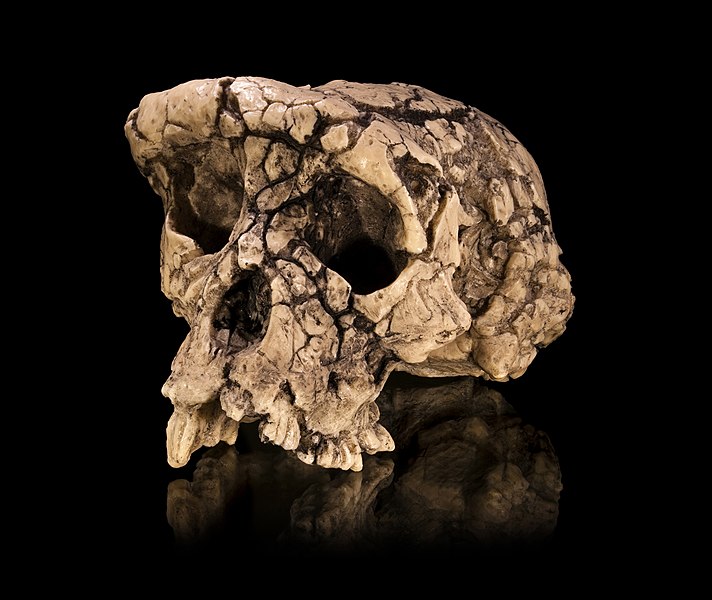
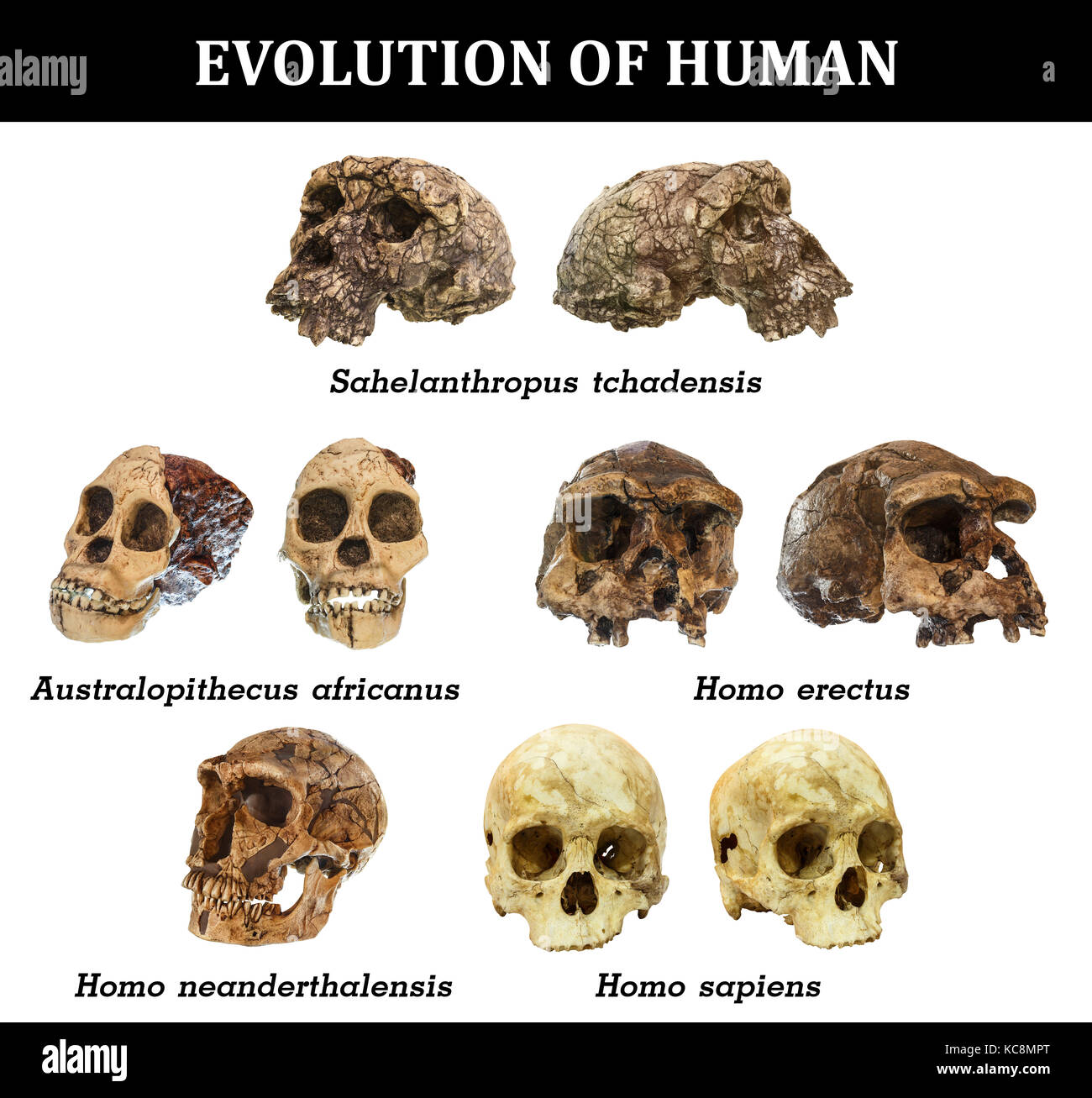
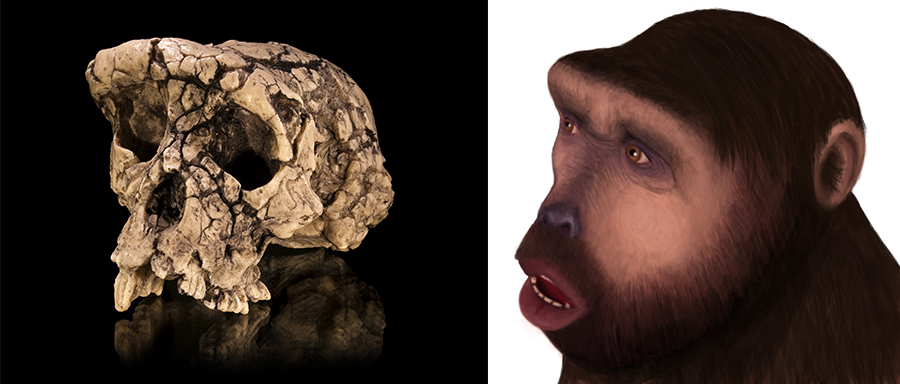
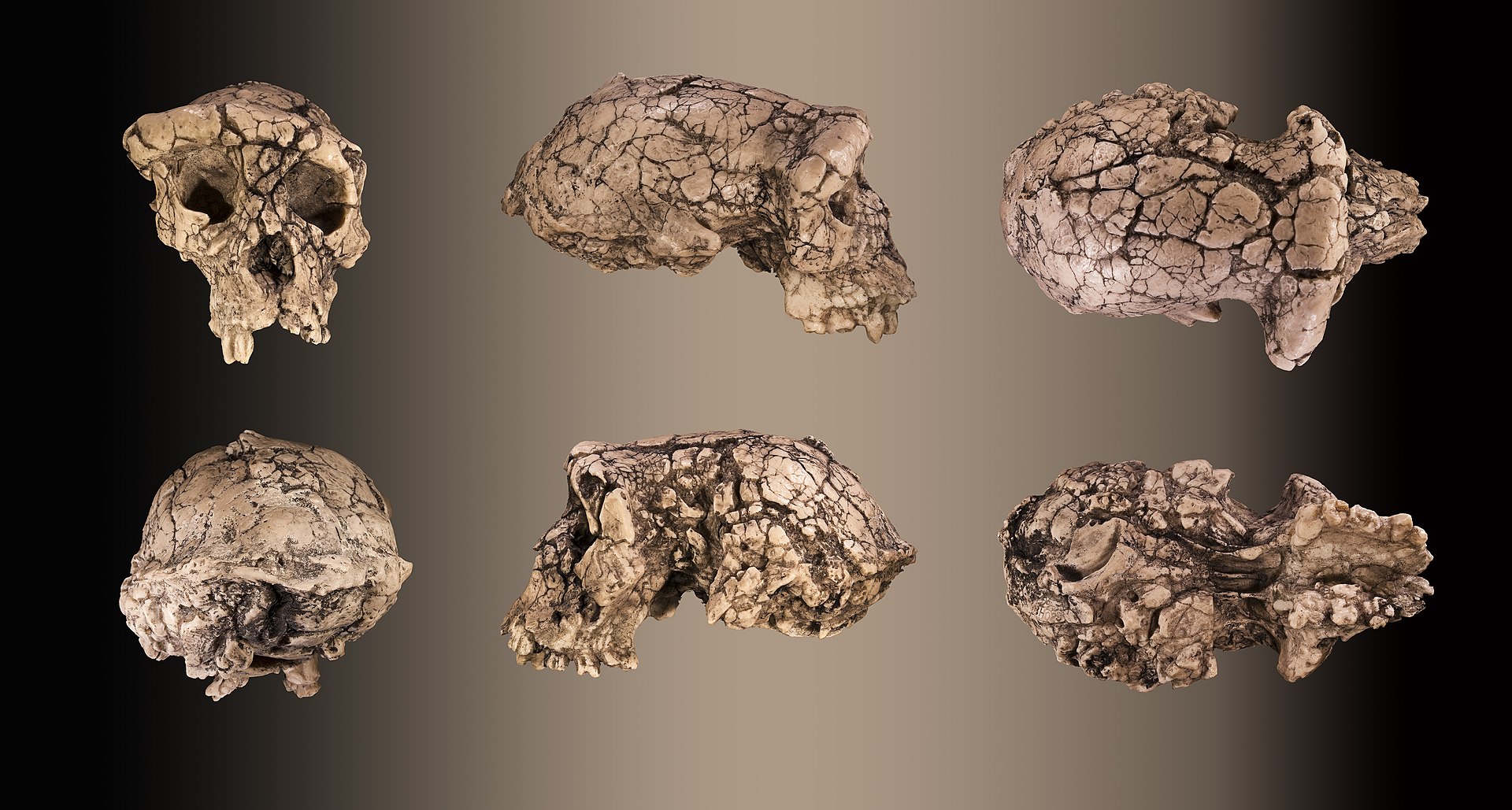
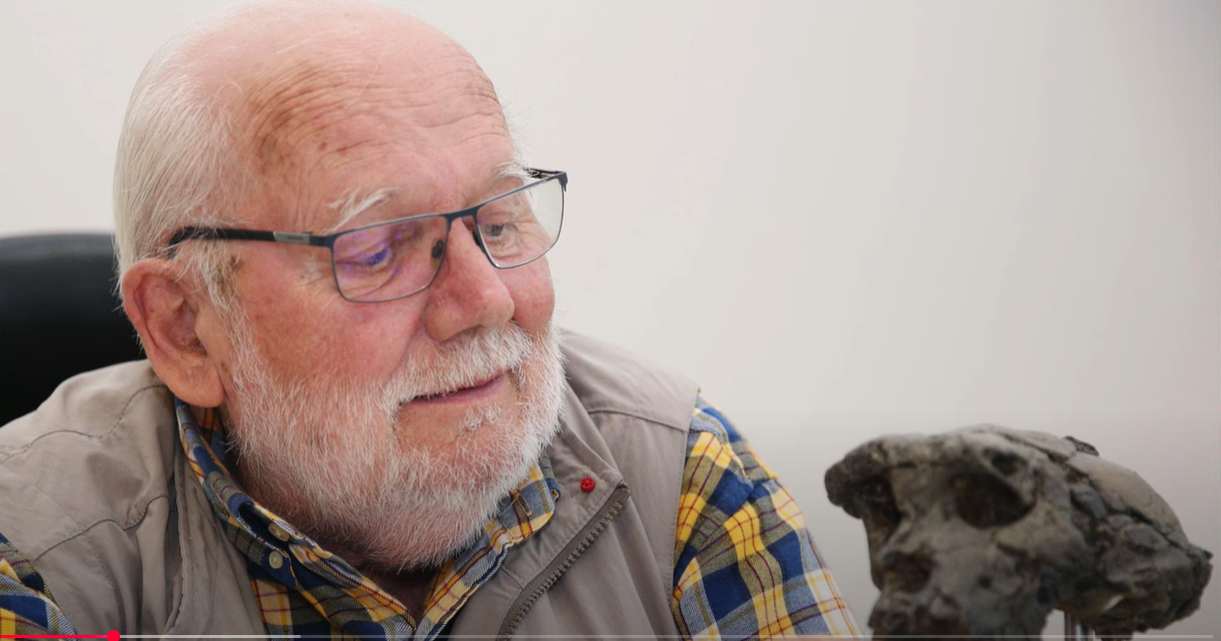
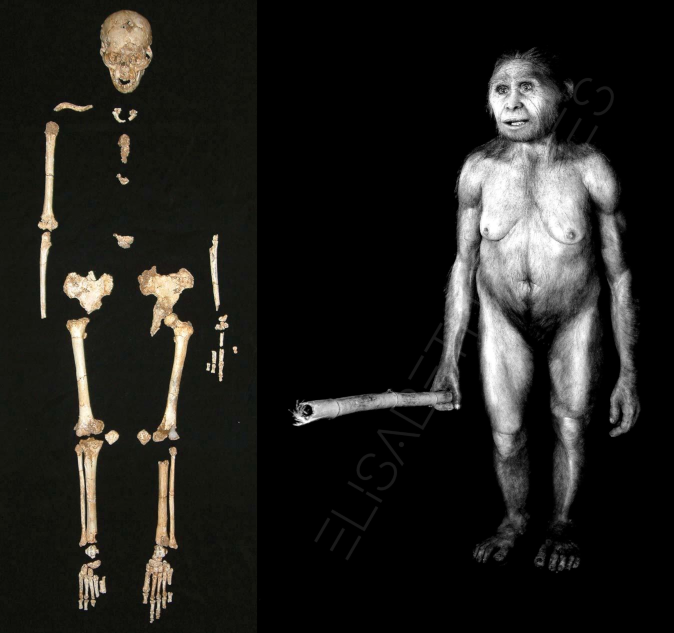
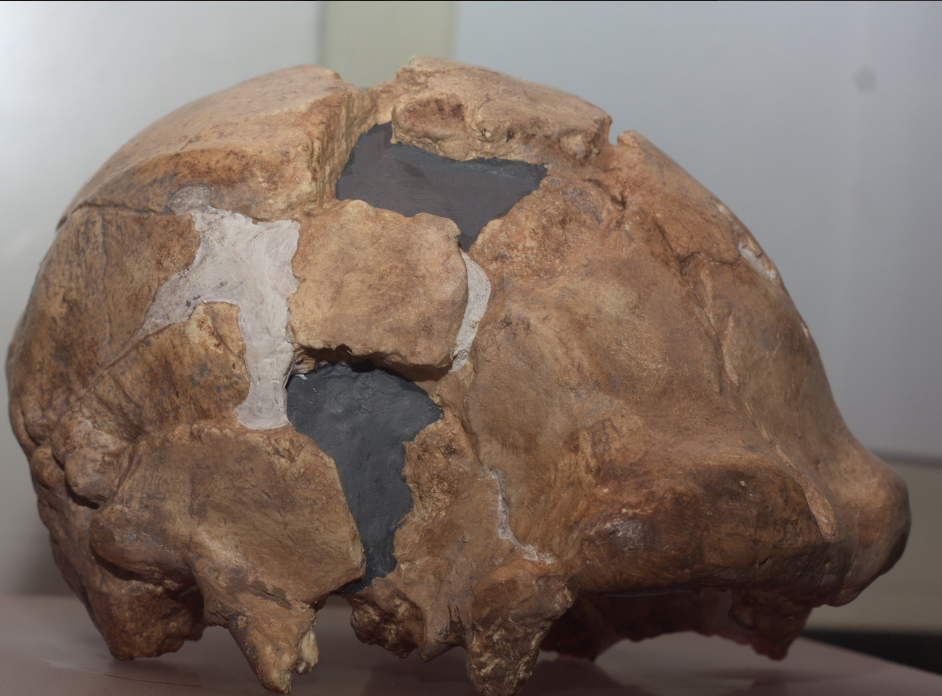
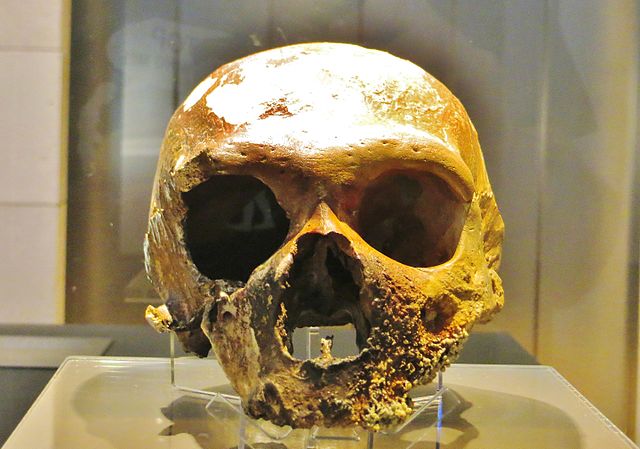
Gallery of other photos:
*** The images in the article and photo gallery are taken from Google Images. We cannot verify copyright or trace the authors. If an author notifies us, we will gladly indicate the source or remove the image if requested. You can use the contact form on the site for such notifications.
Glossary:
1 Holotype: The fossil designated to represent the reference of a new species.
2Taxonomy: scientific classification of organisms [18]. The binomial abbreviated form consists of a noun capitalized indicating the genus, followed by a lowercase adjective representing the species, e.g., Homo sapiens, Australopithecus afarensis, and Canis lupus (domestic dog).
Sources and references
- [1] Il giro del mondo in sei milioni di anni, Guido Barbujani, Andrea Brunelli – Il Mulino.
- [2] Come eravamo, Guido Barbujani – Edizioni Laterza.
- [3] Il grande racconto dell’evoluzione umana, Giorgio Manzi – Il Mulino.
- [4] Ultime notizie sull’evoluzione umana, Giorgio Manzi – Il Mulino.
- [5] Il mondo prima di noi, Tom Higham – Odoya.
- [6] Atlante dell’evoluzione umana, Telmo Piovani – Libreria Geografica.
- [7] Wikipedia: Sahelanthropus tchadensis, Orrorin tugenensis, Ardipithecus kadabba, Ardipithecus ramidus, Australopithecus afarensis, Australopithecus africanus, Homo habilis, Homo ergaster, Homo erectus, Homo heidelbergensis, Homo sapiens.
- [8] Human evolution, The Australian Museum.
- [9] From Sahelanthropus to Homo sapiens: what did our predecessors look like?, Google Arts.
- [10] The ancient hominins, G.M.P.E. Gruppo Mineralogico Paleontologico Euganeo.
- [11] Fossils in human evolution, Wikipedia.
- [12] Human species, Smithsonian Institution – National Museum of Natural History.
- [13] The Evidence for Human Evolution, Jim Foley.
- [14] Guide to Sahelanthropus, Orrorin and Ardipithecus, John Hawks.
- [15] Humans: since when, how, and why we became such, Guido Barbujani – Dialoghi di Pistoia.
- [16] Since when are we human?, Guido Barbujani.
- [17] Laetoli fossil footprints, Wikipedia.
- [18] Taxonomy on Wikipedia.
- [19] Artistic reconstructions of prehistoric humans, Kennis & Kennis.
- [20] The memory of deep time, Guido Barbujani and Giorgio Manzi – Festival della Comunicazione, Camogli.
- [21] Bodies in evolution. A fascinating exploration of possibilities, Telmo Piovani – Dialoghi di Pistoia.
- [22] Encephalization, Giorgio Manzi, Festivalfilosofia 2024, Sassuolo.
- [23] Humanity 1 Million Years Ago by Stefan Milo.
*** Note: This article was translated using an automated workflow created with n8n and OpenAI.