
That humans and chimpanzees share a common ancestor is a well-established and scientifically undeniable truth today.
It’s not too difficult to imagine, especially after observing their behaviors and expressions in documentaries that depict their way of life in their natural habitat. Anatomically, chimpanzees are among the living beings most similar to us; you don’t need to be an anatomy expert to see it. Genetics also confirms this hypothesis: we share almost 99% of our DNA with them [1][2].
In practice, we can consider them evolutionary cousins: we had common ancestors, but at some point, each of our lines took a different path.
To make a simple comparison: the common ancestors between me and my cousins are our grandparents, who lived in the last century. The ancestor that humans and chimpanzees share is not known for certain, but it is estimated to have lived between 6 and 7 million years ago. This is suggested by both fossil records and genetic analyses based on the so-called “molecular clock” [3].
But who exactly was this common ancestor?
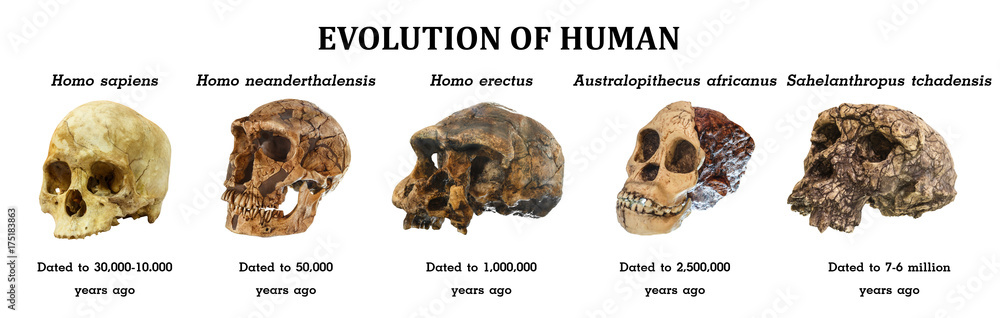
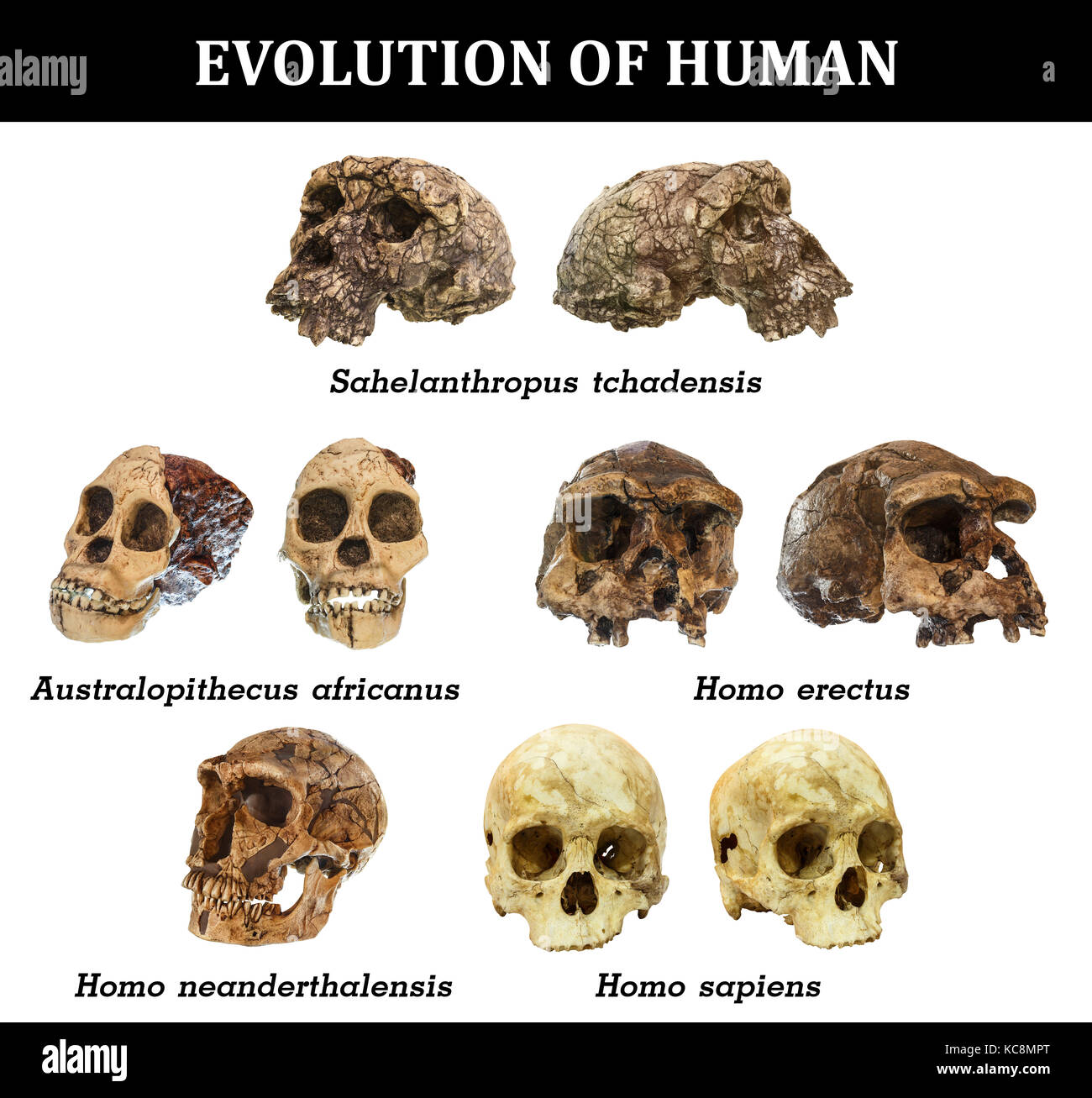
It’s unknown, but one of the most interesting candidates for this role of “grandfather” is a hominid called Sahelanthropus tchadensis.
Regarding it, there are more doubts and questions than certainties due to the limited number of fossil remains found. Therefore, as far as we know, the Sahelanthropus could be the common ancestor, the first specimen of our evolutionary line after the separation from that of chimpanzees, or simply a representative of an extinct evolutionary line.
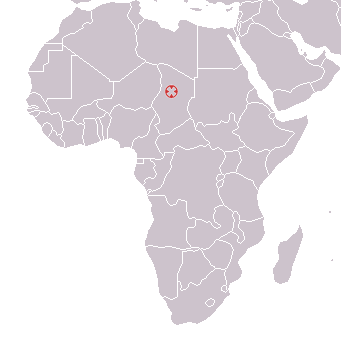
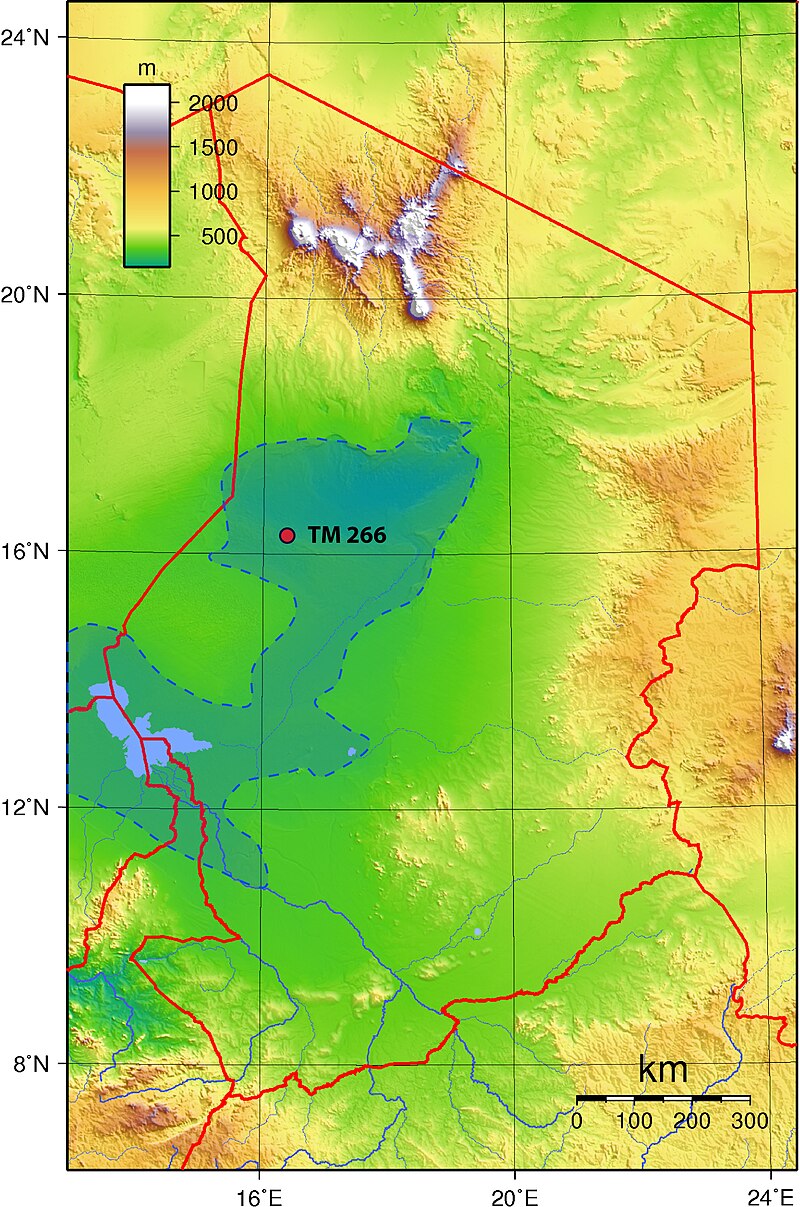
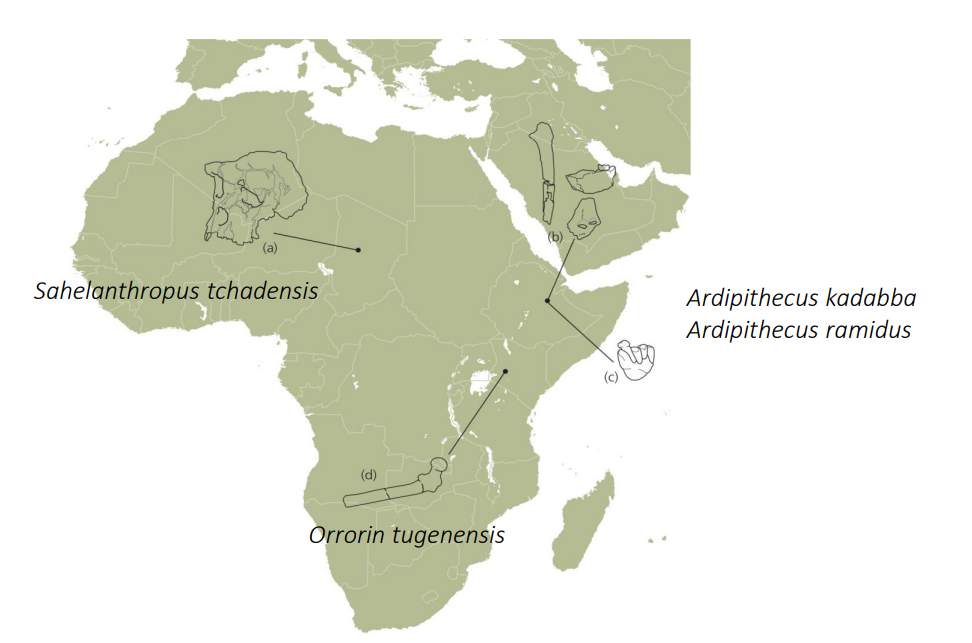
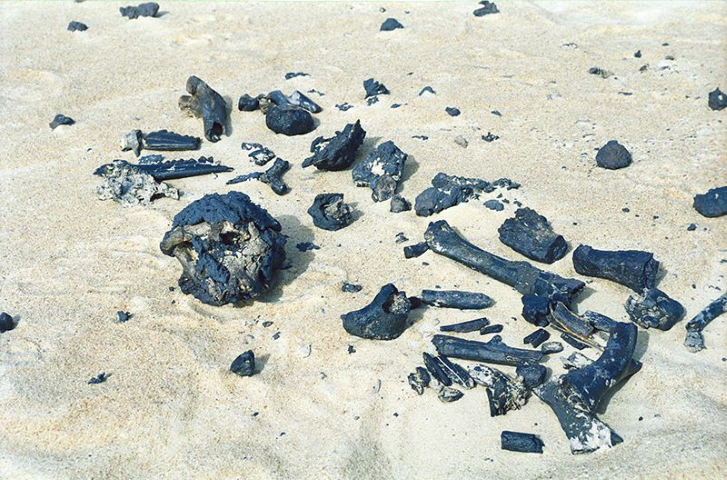
In practice, when we talk about Sahelanthropus, we refer to a small set of remains unearthed in 2001 at the archaeological site of Toros-Menalia, located in the Djurab Desert in Chad. The Djurab Desert is part of the semi-arid territories south of the Sahara, stretching from Senegal (Atlantic Ocean) to Eritrea (Red Sea), known as the Sahel (hence the name Sahelanthropus).
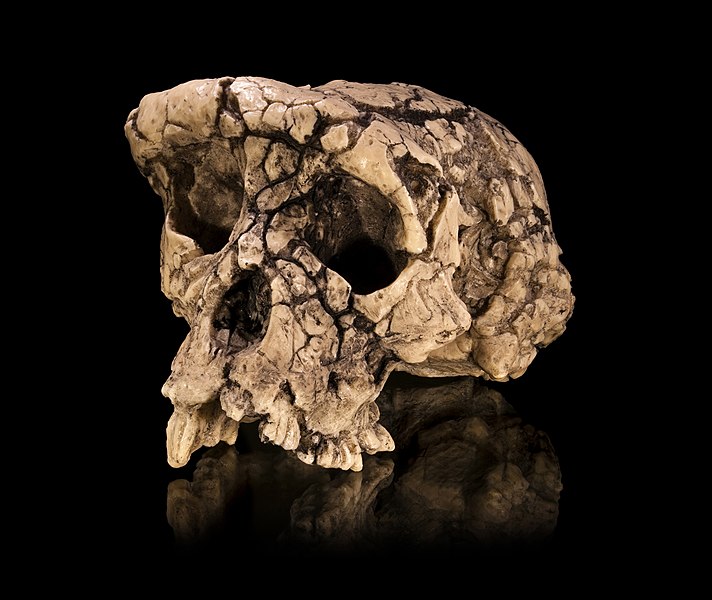
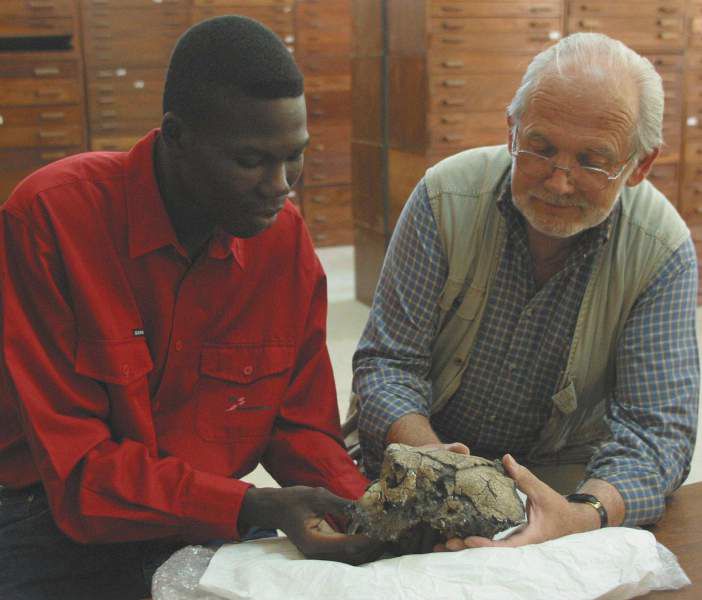
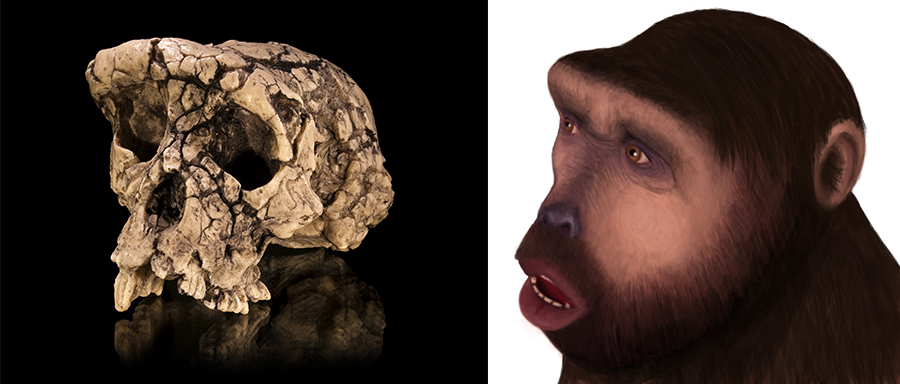
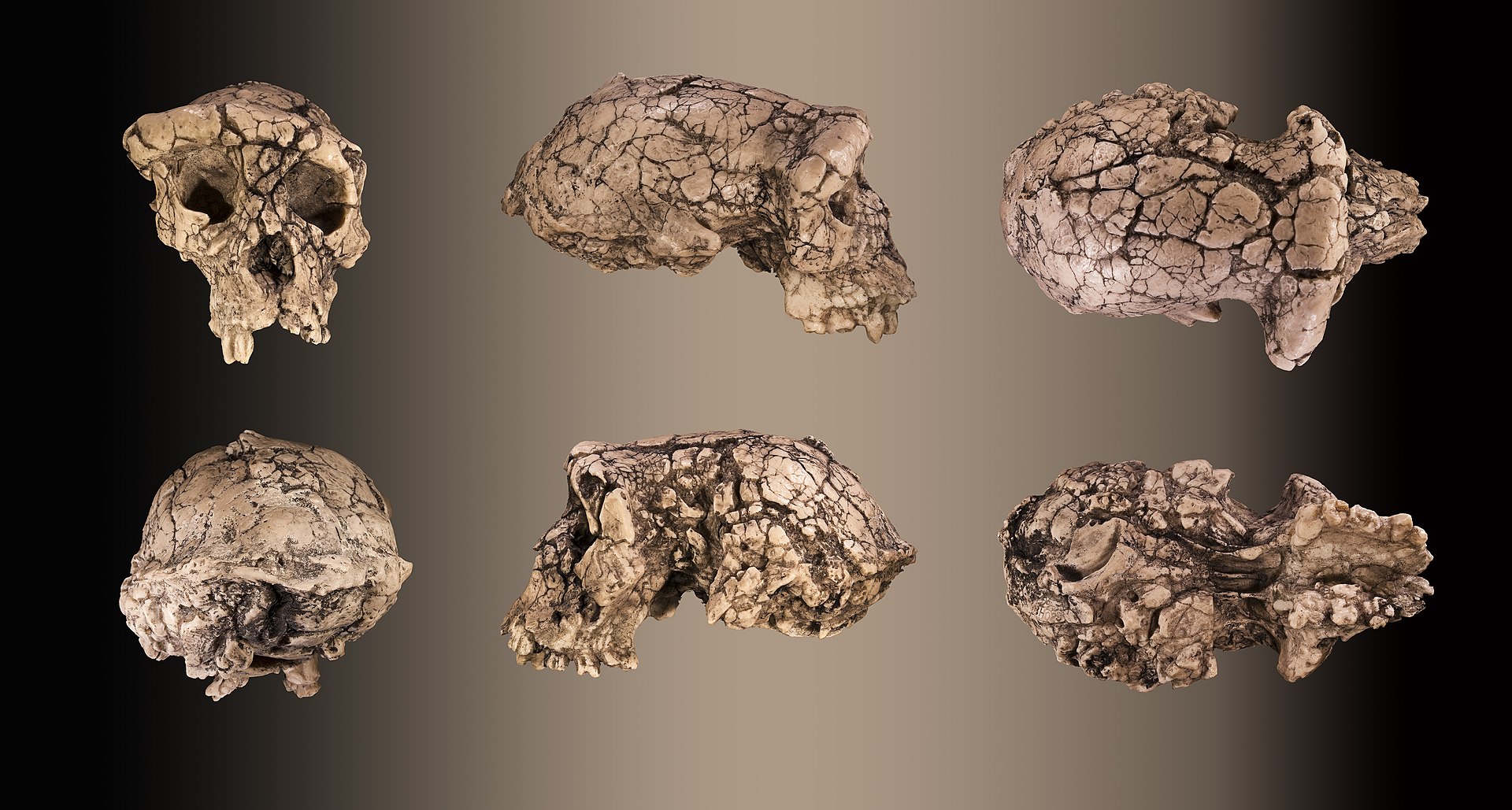
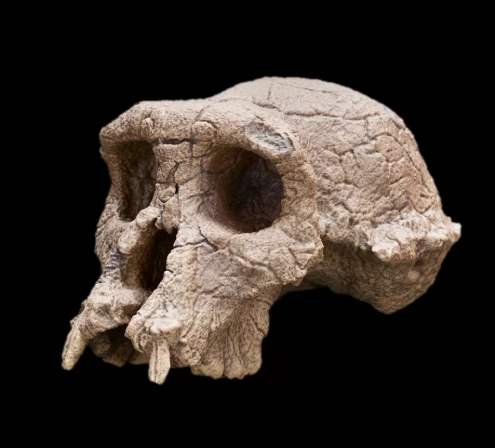
The most important find is a skull, nicknamed Toumaï and classified with the code TM 266-01-60-1, dated to about 7 million years ago. It is one of the oldest hominin fossils ever found. Its belonging to the human evolutionary line is controversial, but if confirmed with the discovery of other specimens, it could indeed be considered the species closest to the divergence point between humans and chimpanzees.
Characteristics of Sahelanthropus tchadensis
From the skull, scientists have deduced that Sahelanthropus had a combination of ape-like and human traits: the brain was small, similar to that of a chimpanzee (330-380 cm3), but the face was shorter and flatter, somewhat closer to that of a human. Additionally, the position of the foramen magnum, the point where the spine connects to the skull, suggests it could walk upright, or at least often stand bipedally. This discovery is fascinating because bipedal locomotion is one of the fundamental characteristics of humans. Moreover, the dental enamel is thicker than that of a chimpanzee but less than that of an australopithecine, while the canines are shorter than those of a chimpanzee. In short, Toumai seems to be a middle ground between a chimpanzee and an australopithecine.
Here is a table summarizing the main characteristics:
| Modern Traits (australopithecine/human) | Intermediate Traits | Ape-like Traits |
| Anterior foramen magnum (indication of upright posture). | Semi-parabolic dental arch (between a U and parabolic). | Limited cranial capacity 330-380 cm3 |
| Reduced canines. | Thicker dental enamel than a chimpanzee but less than an australopithecine. | Very pronounced and continuous brow ridge. |
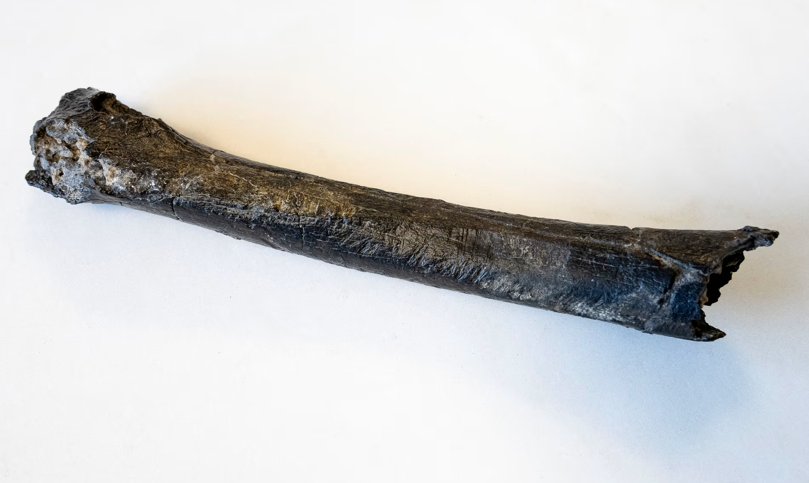
| Limited prognathism. | Femur compatible with knuckle-walking. | |
| Well-marked U-shaped dental arch. | ||
Hypotheses and Controversies
The limited number of fossil remains makes it difficult to determine with certainty whether Toumai is part of our evolutionary line and whether it could have, even occasionally, walked bipedally.
Nevertheless, many consider it the oldest of our ancestors, and this is a fascinating idea because looking at Toumai is like looking at an ancestor who lived 300,000 generations ago.
Photo Gallery ****
**** The images in the article and the photo gallery are taken from Google Images. We cannot verify any copyright or trace the authors. If an author reports it, we will gladly indicate the source or remove it if requested. You can use the site’s contact form for such reports.
Glossary:
- Molecular Clock: The molecular clock is a concept in evolutionary biology based on the idea that neutral genetic mutations (those that do not affect survival or reproduction) accumulate at a constant rate over time in a DNA (or protein) sequence. This constant rate can be used as a “clock” to estimate the time elapsed since two species (or genes) had a common ancestor. By comparing genetic differences between two species or populations, and knowing the average mutation rate, one can calculate the time since evolutionary divergence.
- Foramen Magnum: The foramen magnum (or foramen magnum, in Latin) is a large opening at the base of the skull, located in the occipital bone. Its name literally means “great hole.”
The foramen magnum is the point through which the spinal cord connects with the brainstem.
Vertebral arteries, veins, and accessory nerves also pass through this hole. It is a crucial structure for communication between the central nervous system and the rest of the body. It is involved in the positioning of the skull on the spine. In paleoanthropology, the position of the foramen magnum is an important indicator of posture because in bipedal species (like humans), the foramen magnum is more central and anterior, allowing the skull to balance above the spine. In quadrupeds, it is posterior, as the skull extends forward relative to the spine. - Generation: A human generation refers to the average time interval between the birth of a parent and the birth of their child. In other words, it represents the average reproductive cycle of humans. In genetics and evolution, a human generation is estimated to last on average 25–30 years. In demography, the value can vary based on eras, cultures, and socioeconomic contexts. For example, in modern societies, a generation is about 28–30 years, while in the past, in agricultural or pre-industrial societies, it was 20–25 years, as people had children at a younger age.
Sources and References
- Geni specifici di Homo sapiens, Wikipedia.
- Similitudini tra lo scimpanzè e l’uomo, Istituto Jane Goodall per l’Italia.
- Orologio molecolare, Wikipedia,
- I nostri antenati: quando l’uomo è diventato tale, this blog.
- L’impero degli scimpanzé, documentary on Netflix.
- Osservare l’Evoluzione Umana, slides by Prof. Damiano Marchi (Unipi).
- Toumai the oldest human ancestor, documentary on MagellanTV.
- Non ominino, ma ancora scimmia: il Sahelanthropus tchadensis non camminava su due piedi on UnipiNews.
- The curse of Toumaï: an ancient skull, a disputed femur and a bitter feud over humanity’s origins by Scott Sayare, The Guardian.
- Guide to Sahelanthropus, Orrorin and Ardipithecus, John Hawks.
*** Note: This article was translated using an automated workflow created with n8n and OpenAI.